

Glossary
Flabby
Flaccidity - low acidity in the wine.

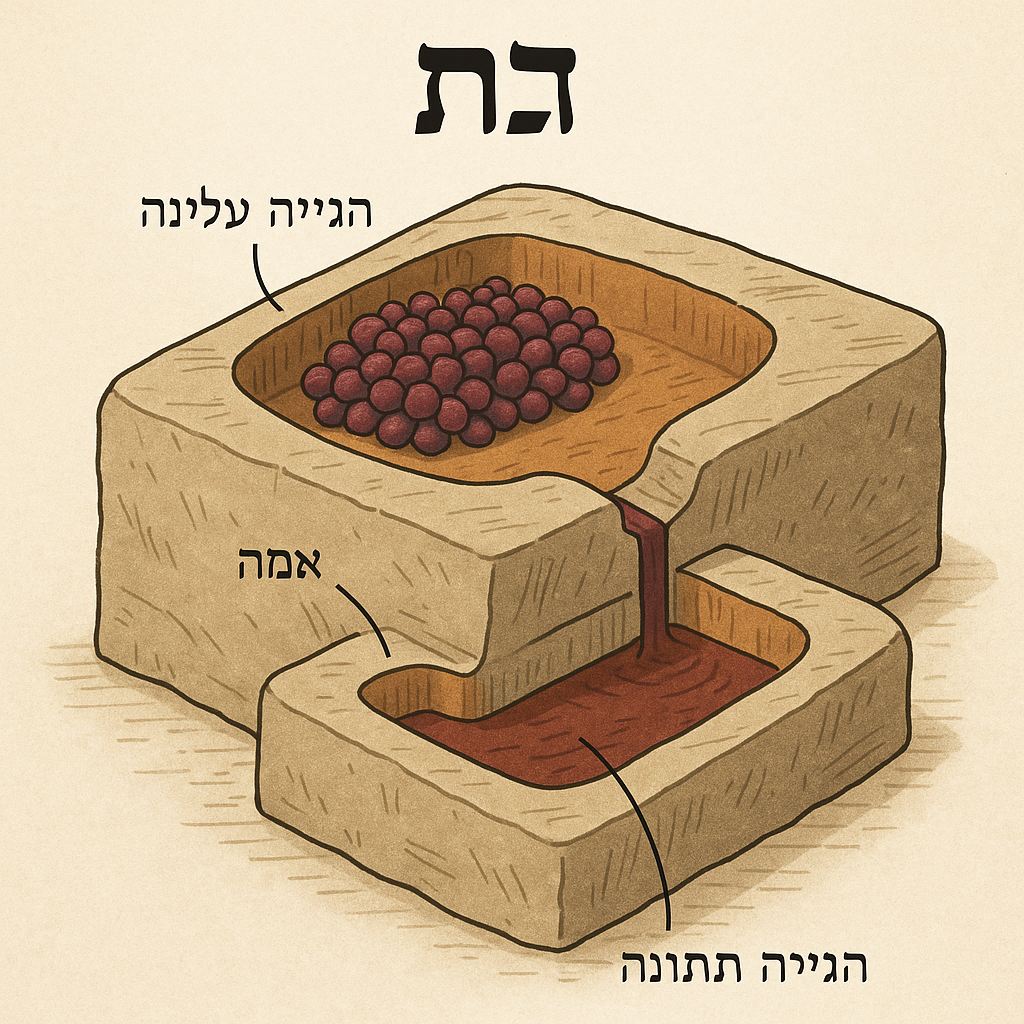
Gat (גת)
The Hebrew word **גת** (*gat*) refers to an **ancient winepress** and holds both **historical** and **biblical** significance.
---
### 🔹 **Definition of גת (Gat)**
* **Meaning**: A *gat* is a **winepress**, traditionally a **rock-hewn installation** used to **crush grapes** and collect their juice during winemaking.
* **Structure**:
* Usually consists of **two parts**:
* **Upper basin**: where grapes were **trodden by foot**.
* **Lower basin**: where the **grape juice (must)** flowed and collected.
* Sometimes included **channels** and **storage pits** carved into stone.
---
### 🔹 **Biblical and Cultural Importance**
* The word *gat* appears frequently in the **Hebrew Bible**:
* Example: *"גַּת בַּיִן"* – *winepress of wine* (Isaiah 63:2–3).
* Symbolically associated with **harvest**, **abundance**, **divine judgment**, or **suffering**.
* Several ancient **place names** are derived from *gat*, including:
* **Gath** (גת פלשתים): one of the five Philistine city-states.
* **Gat-Rimmon** (גת רִמּוֹן): a Levitical town.
---
### 🔹 Modern Use
* **Archaeology**: Ancient gats have been discovered throughout Israel and the Levant, especially in winegrowing regions.
* **Place names**: The term "Gat" appears in modern Israeli localities such as **Kibbutz Gat** or **Givat Gat**.
Glencairn
The Glencairn glass is specially designed for whisky tasting, embodying a unique and thoughtful design aimed at enhancing the whisky drinking experience. Here's a detailed description of its features:
1. **Shape**: The glass has a tulip shape, which is wider at the bottom and narrows towards the top. This design is intentional, focusing the aromas towards the nose, making it easier to detect and appreciate the subtleties of the whisky's scent.
2. **Size**: It is typically about 4.5 inches tall and can hold approximately 6 ounces (175 ml) of liquid, though it's recommended to pour much less when tasting—usually just an ounce or two—to optimize the nosing experience.
3. **Base**: The Glencairn glass has a solid, thick base which makes it stable and comfortable to hold. This base also prevents the hand from warming the whisky too much, allowing the drinker to enjoy the spirit at its intended temperature.
4. **Rim**: The rim of the glass is slightly out-turned to direct the whisky onto the tip of the tongue where sweetness is perceived, enhancing the tasting experience by balancing the strength of the alcohol with the complexity and smoothness of the whisky.
5. **Material**: It is made from clear, high-quality crystal or glass, ensuring that the color of the whisky can be fully appreciated. The clarity of the material also adds to the overall tasting experience, allowing for an unobstructed view of the whisky's body and legs when swirled.
6. **Purpose**: Designed by Raymond Davidson and his team with input from master blenders from the whisky industry, the Glencairn glass is engineered to enhance the enjoyment of all whiskies, be it single malt, blended, or bourbon. Its design facilitates the full appreciation of the spirit's color, aroma, and flavor.
Since its introduction in the early 2000s, the Glencairn glass has gained widespread acceptance and acclaim in the whisky world, becoming the official glass for whisky by many experts and enthusiasts alike. Its design effectively bridges the gap between the traditional nosing glasses used by blenders and a standard tumbler, providing an accessible yet sophisticated option for everyday whisky drinkers and connoisseurs.
Grape Variety
Grape Variety refers to a specific type of grape, distinguished by its genetic makeup, which influences its growth, appearance, flavor, and other characteristics. In viticulture (grape growing) and enology (wine making), the term "variety" is used to denote the subspecies or cultivar of Vitis vinifera, the species of grape most commonly used in winemaking. Each grape variety has unique properties that affect the style, flavor profile, and quality of the wine produced from it.
For example, Cabernet Sauvignon, Merlot, and Chardonnay are all well-known grape varieties, each with distinct flavors, aromas, and characteristics that contribute to the wines' identity. Cabernet Sauvignon is known for its deep color, complex aromatics, and potential for aging, while Merlot is appreciated for its softer, fruitier profile. Chardonnay, a white grape variety, is versatile and can produce a wide range of wine styles from light and crisp to rich and creamy.
Grape varieties can be indigenous to specific regions, where they have been cultivated for centuries, contributing to the region's winemaking identity and traditions. Alternatively, they can be planted in new world wine regions where viticulturists and winemakers aim to match the variety with the ideal terroir (the combination of soil, climate, and topography) to produce high-quality wines.
Understanding grape varieties is fundamental to the study of wine, as each variety responds differently to viticultural practices and winemaking techniques, resulting in the vast diversity of wines available around the world.
Green Tannins
Green or underripe tannins can impart astringency and bitterness to the wine, resulting in an unbalanced and unpleasant taste.
Source: Harvesting grapes before they are fully ripe or using excessive amounts of stems.
Karas
Karas (Armenian: կարաս) is a traditional Armenian clay vessel used for fermenting, aging, and storing wine. Similar to the Georgian Qvevri and ancient amphorae, Karases have been used in Armenia for winemaking for thousands of years. They are typically buried underground to provide natural temperature control during fermentation, contributing to the unique characteristics of Armenian wines.
Lightstrike
Lightstrike occurs when wine is exposed to ultraviolet (UV) light, leading to the development of off-putting aromas, often described as resembling cooked cabbage, skunky aroma, or wet cardboard.
Source: Clear glass bottles and prolonged exposure to sunlight.
Maceration
Maceration is the process by which the phenolic materials of the grape—tannins, coloring agents (anthocyanins), and flavor compounds—are leached from the grape skins, seeds, and stems into the grape juice or must. This process is crucial for red wine production, as it significantly influences the color, flavor, tannin structure, and overall complexity of the wine.
Maceration begins after the grapes have been crushed and lasts throughout the fermentation process. The length of time the juice stays in contact with the grape solids can vary significantly, from a few days to several weeks, and this duration greatly affects the character of the wine. Winemakers control the maceration process carefully, as different grape varieties and wine styles require different approaches. Techniques such as punching down the cap (the solid mass of skins and seeds that floats to the top), pumping over (transferring the juice from the bottom of the fermenter over the cap), and using temperature control are employed to manage extraction during maceration.
In addition to traditional maceration during fermentation, there are other techniques, such as cold maceration (soaking the grapes at a low temperature before fermentation to gently extract colors and flavors) and extended maceration (leaving the wine in contact with the skins for a longer period after fermentation), each with its own impact on the wine's development.
========================================
Maceration is a process used in winemaking, brewing, and other food and beverage industries to extract color, flavor, and tannins from solid ingredients—most commonly grape skins, seeds, and stems—into a liquid medium, such as juice or alcohol.
### **Types of Maceration in Winemaking:**
1. **Pre-Fermentation (Cold Soak)** – Grapes are kept at a low temperature before fermentation to extract color and aroma without fermentation starting.
2. **Fermentation Maceration** – Occurs during fermentation when alcohol begins extracting tannins and flavors from the grape solids.
3. **Extended Maceration** – After fermentation, the wine remains in contact with the grape solids to develop deeper flavors and structure.
### **Key Factors Affecting Maceration:**
- **Temperature:** Warmer temperatures extract more tannins, while cooler temperatures emphasize fruit and aroma.
- **Duration:** Shorter maceration (days) produces lighter wines; longer maceration (weeks) results in bolder, more tannic wines.
- **Grape Variety:** Thicker-skinned grapes (e.g., Cabernet Sauvignon) require longer maceration than thinner-skinned varieties (e.g., Pinot Noir).
Would you like more details on a specific type of maceration or its application in another industry?
Malolactic Fermentation (MLF)
Malolactic fermentation (MLF) is a process in winemaking and fermentation where Malic Acid (a tart acid found in fruits, especially in grapes) is converted into Lactic Acid (a softer, milder acid) by bacteria, primarily Lactic Acid Bacteria (such as Oenococcus oeni).
This secondary fermentation typically occurs after the primary fermentation (alcoholic fermentation) has finished, and it plays an important role in shaping the flavor, texture, and overall profile of the wine.
Key Points about MLF:
- Acidity Reduction: MLF reduces the overall acidity of the wine, making it taste smoother and less tart.
- Flavor Changes: It can also contribute to more complex flavors, such as buttery, creamy, or nutty notes, especially in white wines like Chardonnay.
- Stability: MLF can help to stabilize the wine by reducing the malic acid content, which can prevent the wine from becoming overly acidic as it ages.
- Occurrence: MLF is common in red wines, where the lower acidity and tannin structure help to facilitate the process, but it can also be induced in certain white wines (like Chardonnay) to achieve a fuller, rounder mouthfeel.
- Controlled or Spontaneous: Winemakers can choose to induce MLF by adding specific bacteria to the wine, or they may allow it to occur naturally if conditions are favorable.
Methoxypyrazines
Methoxypyrazines are a group of chemical compounds that are known for their distinctive odor and flavor characteristics. They are a type of pyrazine, which is a basic organic compound with a six-membered ring containing two nitrogen atoms at opposite positions. Methoxypyrazines have methoxy groups (-OCH3) attached to the pyrazine ring.
These compounds are particularly noted for their contribution to the aroma and taste of certain foods and beverages. For example, they are responsible for the earthy, vegetal, or bell pepper-like aromas found in certain varieties of wine, particularly Cabernet Sauvignon, Sauvignon Blanc, and Merlot. Methoxypyrazines can also be found in other products like coffee, beer, and certain vegetables.
The presence and concentration of methoxypyrazines can significantly influence the sensory characteristics of food and beverages. In the wine industry, the management of these compounds is important in viticulture and winemaking to achieve the desired flavor profile.

- Filter by CategoryFilter with Group