

Glossary
Tannins
Wine Tannins refer to the natural compounds present in wine that contribute to its taste, structure, and longevity. Tannins are primarily found in the skins, seeds, and stems of grapes, but they can also be introduced to wine through aging in wooden barrels. Chemically, they are a group of polyphenolic compounds that have the ability to bind and precipitate proteins.
In terms of taste, tannins are responsible for giving wine a dry, puckering sensation in the mouth. This astringency is often described as bitter or harsh, especially in young wines with high tannin content. Over time, as wine ages, tannins can soften and contribute to the complexity and smoothness of the wine's flavor.
Tannins play a crucial role in the aging potential of wine. They act as antioxidants, protecting the wine from oxidation and helping it to develop depth and complexity over time. Wines with higher tannin levels, such as Cabernet Sauvignon, Nebbiolo, and Tannat, are typically more suitable for long-term aging.
The perception and appreciation of tannins can vary greatly among individuals, influenced by personal taste preferences and the balance of tannins with other components in the wine, such as fruitiness, acidity, and alcohol content.
------------------------------------------
Wine tannins are natural compounds found in grape skins, seeds, and stems, as well as in wood barrels used for aging. They contribute to the structure, mouthfeel, and aging potential of wine. Tannins are a type of polyphenol, specifically flavonoids, and are responsible for the astringent sensation experienced when drinking certain wines, particularly reds. Tannins bind with proteins in saliva, causing a drying sensation in the mouth. In wine, they serve several purposes:
1. **Structure:** Tannins provide backbone and structure to wine, giving it a firmness and grip on the palate. This structural element is more noticeable in red wines, especially those intended for aging.
2. **Aging:** Tannins play a crucial role in a wine's aging process. Over time, tannins polymerize and soften, resulting in a smoother, more integrated wine. They also act as antioxidants, helping preserve the wine and allowing it to develop complex flavors with age.
3. **Color Stability:** Tannins contribute to the color stability of red wines, helping them retain their vibrancy over time.
4. **Flavor:** Tannins can impart flavors such as bitterness, astringency, and sometimes a hint of spice or bitterness, depending on their source and concentration.
The perception of tannins in wine can vary depending on factors such as grape variety, winemaking techniques, and the wine's age. While some wine drinkers enjoy the firm structure and aging potential that tannins provide, others may find them too astringent or harsh. Winemakers carefully manage tannin extraction during the winemaking process through techniques such as maceration, fermentation temperature control, and barrel aging to achieve the desired balance and texture in the finished wine.

Tartrate Crystals
Small crystals that form in the wine, often mistaken for glass fragments.
Source: Natural occurrence from tartaric acid in grapes, usually harmless.
Teinturier
A grape variety with colored (red as opposed to clear) flesh and juice.
Traditional Method | Méthode Champenoise
Traditional Method (also known as "Méthode Traditionnelle", "Méthode Champenoise" when specifically referring to Champagne, though this term is restricted to wines produced in the Champagne region of France) is a process used to produce sparkling wine. This method is renowned for producing some of the finest sparkling wines in the world, including Champagne, Sekt (Germany), Cava (Spain), and Franciacorta (Italy). Here is an overview of the Traditional Method process:
### Primary Fermentation
- The process begins with the creation of a base wine. Grapes are harvested, pressed, and fermented into a still wine, similar to the production of non-sparkling wines.
### Blending (Assemblage)
- Winemakers may blend wines from different grape varieties, vineyards, or vintages to achieve the desired style and consistency, especially in the case of non-vintage sparkling wines.
### Bottling with Liqueur de Tirage
- The base wine is bottled along with a mixture of sugar and yeast, known as "liqueur de tirage". This mixture initiates the second fermentation inside the bottle, which is sealed with a crown cap.
### Second Fermentation
- The second fermentation occurs in the bottle, producing carbon dioxide (which creates the bubbles) and a small amount of alcohol. This process also contributes to the complexity of the wine's flavor.
### Aging on Lees
- The wine is aged on the dead yeast cells (lees) left over from fermentation. This aging period can vary from 15 months to several years, depending on the wine's style and regulations of the specific sparkling wine designation. Aging on lees adds richness, complexity, and texture to the wine.
### Riddling (Remuage)
- Traditionally, bottles were gradually tilted and rotated (a process known as "riddling" or "remuage") to collect the yeast sediment toward the neck of the bottle. Today, mechanized riddling racks (gyropalettes) are often used to expedite this process.
### Disgorging (Dégorgement)
- The neck of the bottle is frozen, trapping the yeast sediment in a small ice plug. The bottle is opened, and the pressure inside expels the ice plug, leaving the wine clear of sediment.
### Dosage
- After disgorging, a mixture of wine and sugar (known as "liqueur d'expédition" or "dosage") is added to adjust the sweetness level of the final product, ranging from "Brut Nature" (no added sugar) to "Doux" (sweet).
### Final Corking
- The bottle is finally sealed with a traditional cork and wire cage to contain the pressure of the sparkling wine.
Wines produced using the Traditional Method are appreciated for their fine bubbles, complexity, and ability to age gracefully. This labor-intensive and time-consuming process is a key factor behind the premium quality and higher price point of these sparkling wines compared to those produced by other methods, such as the Tank Method (Charmat Method).
Ullage
Ullage refers to the unfilled space left in containers, such as barrels, tanks, or bottles, especially when they contain liquids. This space is necessary for various reasons, including allowing for the expansion of liquid, preventing spillage or overflow during transportation, or accommodating gas that may be part of the packaging process. In the context of wine, beer, and spirits, ullage can also indicate the volume of liquid that has evaporated or leaked over time, which can be an important factor in assessing the condition and value of aged beverages. In space missions, ullage refers to the liquid propellant settling in spacecraft fuel tanks to ensure proper engine ignition in microgravity environments.
Vine Life Cycle
## Vine Life Cycle (Vitis vinifera) – Technical Overview
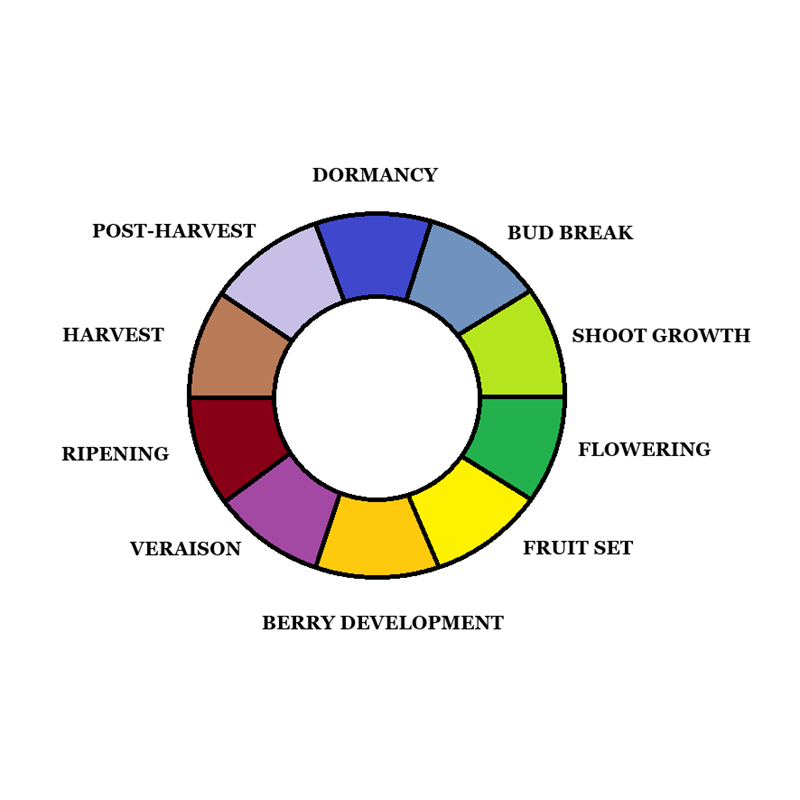
The life cycle of the grapevine (Vitis vinifera) consists of **two parallel frameworks**:
1. **Annual phenological cycle** (repeats every growing season)
2. **Long-term biological life span** (from planting to senescence)
Both are essential for viticulture, vineyard management, and wine quality modeling.
---
# I. Annual Phenological Cycle
In temperate viticultural climates (e.g., Mediterranean conditions typical of Israel), the vine follows a predictable seasonal rhythm regulated primarily by **temperature (Growing Degree Days), photoperiod, and water availability**.
### 1. Winter Dormancy (Endodormancy → Ecodormancy)
**Period:** Late autumn to late winter
**Physiology:**
* Leaf fall triggered by decreasing photoperiod and temperature
* Carbohydrates stored in trunks and roots as starch
* Buds enter dormancy (chilling requirement needed to break)
**Viticultural relevance:**
* Pruning determines yield potential
* Frost protection planning
* Carbohydrate reserve assessment
---
### 2. Budburst (Budbreak)
**Period:** Early spring (≈ 10°C mean daily temperature threshold)
**Process:**
* Sap flow resumes (“bleeding”)
* Bud scales split
* Green shoot emergence
**Risks:**
* Spring frost damage
* Uneven budburst in water-stressed vines
**Technical note:** Timing strongly affects harvest date and style potential.
---
### 3. Shoot Growth & Leaf Development
**Period:** Spring
**Process:**
* Rapid shoot elongation
* Leaf area expansion
* Inflorescence development
**Physiology:**
* Transition from reliance on stored carbohydrates to active photosynthesis
**Management:**
* Canopy positioning
* Shoot thinning
* Early disease control
---
### 4. Flowering (Anthesis)
**Period:** Late spring
**Temperature sensitivity:** Optimal ~20–30°C
**Process:**
* Self-pollination (grapevine is hermaphroditic)
* Fertilization
* Fruit set initiation
**Risks:**
* Coulure (poor fruit set)
* Millerandage (uneven berry size)
Fruit set determines **yield potential**.
---
### 5. Berry Development (Stage I–III Model)
#### Stage I – Rapid Growth (Cell Division)
* Berries small, hard, high organic acids (tartaric & malic)
* Chlorophyll present
#### Stage II – Lag Phase
* Seed maturation
* Slow growth
* Organic acid peak
#### Stage III – Ripening (Veraison onward)
---
### 6. Veraison
**Definition:** Onset of ripening
**Changes:**
* Color change (anthocyanins in red cultivars)
* Sugar accumulation (glucose & fructose)
* Acid degradation (especially malic acid)
* Berry softening
* Aroma precursor synthesis
This stage marks the **metabolic shift from growth to maturation**.
---
### 7. Ripening to Harvest
**Key biochemical processes:**
* Sugar accumulation (Brix increase)
* Acid respiration
* Phenolic polymerization
* Flavor compound development (terpenes, thiols, norisoprenoids)
**Harvest decision based on:**
* Technological maturity (sugar/acid ratio)
* Phenolic maturity
* Aromatic maturity
* Style objectives
---
### 8. Post-Harvest Phase
Even after harvest:
* Photosynthesis continues
* Carbohydrate reserves restored
* Bud differentiation for next season occurs
This stage directly affects **next year's yield and vine balance**.
---
# II. Long-Term Biological Life Cycle
### 1. Establishment Phase (Years 0–3)
* Root system development
* Trunk formation
* First small crop (usually year 2–3)
### 2. Early Production (Years 4–7)
* Increasing yield
* Structural stabilization
### 3. Mature Production (Years 8–25+)
* Yield and quality stabilize
* Root system fully developed
* Balanced vegetative/reproductive growth
### 4. Old Vine Stage (25–40+ years)
* Reduced yield
* Greater root depth
* Often higher fruit concentration
* Increased trunk lignification
### 5. Senescence
* Declining productivity
* Disease accumulation (trunk diseases)
* Eventual vineyard renewal
Some vineyards exceed 80–100 years under proper management.
---
# III. Physiological Control Mechanisms
The vine life cycle is regulated by:
* Temperature (heat summation models)
* Hormones (auxins, gibberellins, ABA during veraison)
* Water status (hydric stress modulates berry size and phenolics)
* Carbohydrate allocation
* Root–shoot signaling
---
# IV. Climatic Influence in Mediterranean Regions (e.g., Israel)
Given your interest in detailed viticultural zoning:
* Mild winters → variable chilling fulfillment
* Hot summers → rapid sugar accumulation
* Diurnal shifts critical for acid retention
* Irrigation management significantly shapes phenology
---
# V. Database Classification Structure (for Wine Atlas Integration)
**Entity:** Vine Life Cycle
**Attributes:**
* Phase name
* Physiological status
* Temperature threshold
* Duration (days/GDD)
* Primary metabolic activity
* Viticultural interventions
* Risk factors
* Impact on wine style
---
If you would like, I can also provide:
* A **GDD-based phenology model table**
* A **BBCH scale mapping for grapevine**
* A **diagrammatic lifecycle chart**
* A **Mediterranean vs Cool Climate comparison model**
* A **database-ready structured schema (SQL/Excel format)**
================================================
## Vine Life Cycle (Vitis vinifera) – Technical Overview
The **vine life cycle** refers to the annual phenological development of the grapevine, primarily of the species *Vitis vinifera*, from winter dormancy through vegetative growth, reproduction (flowering and fruiting), ripening, and return to dormancy. This cycle is climatically regulated (temperature, photoperiod, water availability) and viticulturally managed (pruning, canopy control, irrigation).
The cycle can be divided into two frameworks:
1. **Annual Phenological Cycle (Seasonal)**
2. **Long-Term Biological Life Cycle (From planting to senescence)**
---
# I. Annual Phenological Cycle
### 1. Dormancy (Winter Rest)
**Period:** Late autumn – winter
**Trigger:** Decreasing temperature and daylight
* Leaves senesce and fall.
* Carbohydrates are stored in trunk and roots.
* Buds enter endodormancy (physiological inhibition).
* Cold hardiness develops.
**Viticultural importance:**
Winter pruning determines yield potential and vine balance for the coming season.
---
### 2. Budburst (Budbreak)
**Occurs when:** Soil temperature ≈ 8–10°C; air temperature consistently above 10°C
* Bud scales open.
* Green shoots emerge.
* Sensitive to spring frost.
**Physiological processes:**
Mobilization of stored carbohydrates; root activity resumes.
---
### 3. Shoot Growth & Leaf Development
**Rapid vegetative phase**
* Internode elongation.
* Leaf expansion.
* Inflorescences become visible.
* High nitrogen and water demand.
**Management:**
Shoot thinning, canopy positioning, disease protection.
---
### 4. Flowering (Anthesis)
**Temperature dependent:** Optimal 20–30°C
* Self-pollination occurs (hermaphroditic flowers in *Vitis vinifera*).
* Fruit set follows successful fertilization.
**Critical factor:**
Weather during flowering determines yield potential.
---
### 5. Fruit Set
* Fertilized flowers develop into berries.
* Poor conditions cause **coulure** (flower drop) or **millerandage** (uneven berry size).
---
### 6. Berry Development (Green Growth Phase)
Two sub-phases:
#### Stage I – Cell Division & Expansion
* Rapid berry growth.
* High organic acid accumulation (tartaric, malic).
* Chlorophyll present (berries are green).
#### Stage II – Lag Phase
* Growth slows.
* Seed development completes.
---
### 7. Veraison (Onset of Ripening)
**Key phenological marker**
* Red cultivars develop anthocyanins.
* White cultivars become translucent/yellow.
* Sugar accumulation begins.
* Acidity declines (malic respiration).
This stage signals metabolic transition from growth to ripening.
---
### 8. Ripening (Maturation)
* Sugar accumulation (glucose, fructose).
* Decrease in titratable acidity.
* Phenolic maturation (tannins, anthocyanins).
* Aroma precursor development.
**Harvest timing depends on:**
* °Brix
* pH
* TA
* Phenolic maturity
* Style objective
---
### 9. Post-Harvest Phase
* Photosynthesis continues.
* Carbohydrate reserves replenished.
* Leaf senescence begins.
* Perennial tissues prepare for dormancy.
---
# II. Long-Term Biological Life Cycle
### 1. Propagation
* Sexual (seed) – rare in viticulture.
* Asexual (cuttings, grafting onto rootstocks).
### 2. Establishment (Years 1–3)
* Root system development.
* Trunk formation.
* Limited or no commercial crop.
### 3. Early Production (Years 3–7)
* Increasing yield.
* Structural training completed.
### 4. Mature Phase (Years 8–30+)
* Stable production.
* Balanced vegetative/reproductive growth.
* Often optimal quality period.
### 5. Old Vine Stage (30–100+ years)
* Reduced yield.
* Deep root systems.
* Often associated with concentration and site expression.
### 6. Senescence
* Decline in vigor.
* Increased disease susceptibility.
* Vineyard replanting considered.
---
# Environmental Control Factors
| Factor | Influence |
| ------------------ | ---------------------------------- |
| Temperature | Drives phenological timing |
| Water availability | Controls vigor and berry size |
| Soil type | Root penetration, nutrient supply |
| Sunlight | Photosynthesis, phenolic synthesis |
| Rootstock | Vigor control, drought resistance |
| Pruning | Crop load regulation |
---
# Physiological Summary
The vine is:
* A **perennial woody liana**
* A **C3 photosynthetic plant**
* A **temperate climate species**
* Reproductively active during warm seasons
* Dormant during cold periods
---
If you would like, I can also provide:
* A **BBCH scale table for grapevine**
* A **climate-based phenology comparison (cool vs warm regions)**
* A **database-ready structured schema for phenological tracking**
* A **diagrammatic growth timeline suitable for Wine Atlas**
Vine/Vine Growing/Viticulture
Vine growing, also known as viticulture, is the cultivation and harvesting of grapevines for the purpose of winemaking, fresh grapes, raisins, or table grapes. It is a branch of horticulture that focuses on the science, study, and production of grapes, integrating aspects of biology, environmental science, and agriculture. The practice of viticulture considers a wide range of factors to optimize the quality and quantity of grape production, including:
1. **Climate and Weather:** Grapes have specific climatic requirements. Temperature, sunlight, and rainfall significantly affect the grapes' quality and character. Different grape varieties thrive in different climatic conditions.
2. **Soil Types:** The composition, depth, and drainage of the soil are crucial for vine health and fruit quality. Different grape varieties may prefer different soil types, affecting the taste and quality of the wine.
3. **Grape Varieties:** There are thousands of grape varieties, each with its own characteristics and adaptability to different environments. Choosing the right variety for the local climate and soil is vital.
4. **Vineyard Site Selection:** The location of a vineyard affects its microclimate, including exposure to sunlight, wind, and risk of frost. Slope and orientation (aspect) can significantly influence the microclimate around the vines.
5. **Planting Methods:** The spacing of vines, the training system used (how vines are supported and shaped), and the rootstock selection are all important decisions that affect vine health and productivity.
6. **Pruning and Canopy Management:** Proper pruning and canopy management ensure that vines have the right balance of fruit and foliage, improving grape quality and reducing the risk of disease.
7. **Pest and Disease Management:** Viticulturists must manage pests and diseases through integrated pest management practices, including the use of resistant grape varieties, mechanical controls, and, when necessary, chemical treatments.
8. **Irrigation and Water Management:** Depending on the region and climate, irrigation may be necessary to supplement natural rainfall. Efficient water management is crucial to avoid stress on the vines that can affect grape quality.
9. **Harvesting:** The timing of the harvest is critical and depends on the desired ripeness level of the grapes, which in turn affects the style and flavor profile of the wine.
Viticulture is both an art and a science, requiring a deep understanding of the local environment and the specific needs of grape varieties. The goal of viticulture is to produce the highest quality grapes possible, which in turn can be transformed into high-quality wine. Advances in viticultural practices continue to evolve with research and technology, improving sustainability, efficiency, and the quality of the vineyards.
Viticulture
Viticulture is the science, cultivation, and study of grapes. It is a branch of the science of horticulture. While viticulture is often associated closely with winemaking, it also covers the production of grapes for the consumption as table grapes, dried fruit, or juice. The practice of viticulture involves a broad range of activities focused on grapevine planting, training, pruning, canopy management, monitoring and controlling pests and diseases, irrigation, and managing soil health and nutrition to ensure the healthy growth of grapevines and the quality of grapes.
Viticulturists are professionals who specialize in the art and science of grape growing. They make numerous decisions in the vineyard that can affect the final quality of the grape and, consequently, the wine or other products made from the grape. These decisions include the choice of grape variety, rootstock, planting density, trellising system, vine training methods, and harvest timing.
The specific practices of viticulture can vary widely around the world due to differences in climate, geography, vine species, and winemaking traditions in each region. For example, in cooler climates, viticulturists might focus on maximizing sun exposure to ripen grapes, while in very hot climates, they might aim to protect grapes from sunburn. Sustainable viticulture, organic viticulture, and biodynamic viticulture are different approaches within viticulture, each with its own set of principles and practices aimed at minimizing environmental impact, avoiding chemical inputs, and in the case of biodynamics, incorporating holistic and esoteric concepts into grape growing.
Volatility (Volatile Acidity)
In winemaking, Volatility or Volatile Acidity (VA) refers to the amount of certain acidic compounds that can vaporize and be detected in the aroma of the wine. Volatile acidity is primarily composed of acetic acid (the main component of vinegar) but can also include other volatile acids such as formic, butyric, and propionic acids.
The presence of volatile acidity in wine is normal and, at low levels, can contribute to the complexity and character of the wine. However, when the concentration of these volatile acids becomes too high, it can lead to an undesirable sharp, vinegary smell and taste, which is considered a fault in the wine.
Volatile acidity is often produced by the activity of bacteria such as Acetobacter and Gluconobacter, which can oxidize ethanol (alcohol) to acetic acid, especially in conditions where there is exposure to oxygen. The production of volatile acidity can be increased by factors such as poor sanitation, high temperatures, and prolonged contact with air.
Winemakers carefully monitor and control volatile acidity levels to ensure they stay within acceptable limits. In many wine regions, there are legal limits for volatile acidity in wine. The methods to manage or reduce volatile acidity include good winery hygiene, minimizing oxygen exposure, and sometimes using specific winemaking techniques or additives.
Description: Volatile acidity (VA) refers to the presence of acetic acid in wine, leading to a vinegar-like aroma. It can make the wine seem sharp or overly acidic.
Source: Contaminated equipment, poor hygiene, or the growth of acetic acid bacteria.
Volatiles (Volatile Acidity):**
- **Description:** Vinegary, acetic acid aroma and taste. High levels can be unpleasant and indicative of a fault.
- **Source:** Acetobacter bacteria activity, exposure to air, or
WINE DICTIONARY
Welcome to the Wine Dictionary, an essential guide for anyone looking to deepen their understanding of the complex and fascinating world of wine. Whether you're a seasoned connoisseur, a casual enthusiast, or a beginner eager to learn, this dictionary offers a comprehensive reference to the terminology, regions, grape varieties, and techniques that define this ancient and ever-evolving beverage.
The world of wine can be both delightful and daunting, with its own language full of specific terms and concepts. This Wine Dictionary is designed to demystify these terms, providing clear, concise definitions that make it easier for you to navigate wine menus, understand wine reviews, and engage in conversations about wine with confidence.
In this guide, you will find:
1. **Terminology**: Learn the meanings of words and phrases commonly used in viticulture (grape growing), vinification (wine making), and wine tasting. From 'acidity' to 'zesty', each entry is explained in a straightforward manner.
2. **Grape Varieties**: Discover the characteristics of popular and lesser-known grape varieties. Understand the differences between Cabernet Sauvignon, Merlot, Chardonnay, Riesling, and many others, including their typical flavor profiles and regions where they thrive.
3. **Wine Regions**: Explore the world's major wine regions, from the rolling hills of Tuscany to the rugged landscapes of Napa Valley. Learn about the climate, soil, and unique winemaking traditions that define the character of wines from these areas.
4. **Wine Styles**: Gain insight into the diverse styles of wine, including red, white, rosé, sparkling, dessert, and fortified wines. Understand how factors like grape variety, climate, and winemaking techniques influence the style and taste of each wine.
5. **Food Pairings**: Get tips on pairing wine with food, enhancing both the culinary and wine tasting experience. Learn which wines complement certain dishes and why.
6. **Tasting Techniques**: Master the art of wine tasting with guidance on how to assess a wine's appearance, aroma, taste, and finish.
7. **Wine Service and Storage**: Learn about the proper ways to serve and store wine to preserve its quality and flavor.
The Wine Dictionary is more than just a reference; it's a doorway into a world of sensory experiences and cultural traditions. Whether you're enjoying a quiet evening with a bottle of your favorite wine or hosting a tasting event for friends, this guide will enrich your appreciation and enjoyment of wine.
So, pour yourself a glass, open the pages, and embark on a journey through the captivating world of wine. Cheers!

- Filter by CategoryFilter with Group