Add a Title
[DESCRIPTION]

Region
Region(s)Country


0
0
Classifications
Add a Title
[DESCRIPTION]
0
[CATEGORY]
[DESCRIPTION]
0
# Jurançon Wine Region
| **Field** | **Technical Profile** |
| --------------------- | ---------------------------------------------------------------------------------------- |
| **Title** | Jurançon |
| **Subtitle** | Historic Sweet and Dry White Wine Appellation of the Béarn Foothills |
| **Parent Region** | South West France (Sud-Ouest) – Béarn, Pyrénées-Atlantiques, Nouvelle-Aquitaine |
| **Established Year** | **AOC Jurançon** established **1936**; **AOC Jurançon Sec** established **1975** |
| **Area** | Approximately **1,200–1,300 ha** under vine |
| **Production Volume** | Approximately **45,000–60,000 hL** annually (≈6–8 million bottles, depending on vintage) |
| **Country** | France |
---
## Introduction
Jurançon is one of France's oldest and most distinctive white wine regions, situated in the foothills of the western Pyrenees near the city of Pau in the historic province of Béarn. Renowned for producing both intensely aromatic sweet wines and vibrant dry whites, Jurançon is characterized by steep hillside vineyards, a mild Atlantic climate, and indigenous grape varieties that have adapted to the region over centuries. The appellation is particularly famous for late-harvest wines made from naturally concentrated grapes, often harvested in multiple passes through the vineyards (*tries successives*), yielding wines with remarkable freshness, complexity, and longevity.
---
## Climate
**Climate Type**
* Temperate maritime with strong Atlantic influence
* Modified by the nearby Pyrenees
* Mild mountain climate
* Long, warm autumns
* Significant foehn ("Vent du Sud") effect
### Climate Characteristics
* Annual rainfall: **1,100–1,400 mm**
* Average growing season temperature: **15–17°C**
* Mild winters
* Warm but rarely excessively hot summers
* Excellent autumn sunshine
* Frequent warm, dry föhn winds descending from the Pyrenees after rainfall
* Long ripening period extending into November or December for sweet wines
The föhn wind is one of the defining climatic features of Jurançon, rapidly drying grapes after humid conditions and enabling healthy late harvests without requiring noble rot.
---
## Soil
Jurançon's vineyards occupy rolling hills composed of highly variable geological formations.
Principal soil types include:
* Clay-limestone
* Siliceous clay
* Conglomerate (Poudingues de Jurançon)
* Sandstone
* Flysch
* Marl
* Gravelly colluvial soils
* Pebbly alluvial deposits
* Iron-rich clay
* Weathered schist in localized sites
These generally well-drained soils encourage deep rooting and moderate vine vigor.
---
## Appellations
The region includes two Appellations d'Origine Contrôlée (AOC):
* **AOC Jurançon** (sweet wines)
* **AOC Jurançon Sec** (dry wines)
Both appellations are regulated by the Institut National de l'Origine et de la Qualité (INAO).
---
## Classifications
* Appellation d'Origine Contrôlée (AOC)
* Vin Blanc Sec (Dry White)
* Vin Blanc Moelleux (Sweet White)
* Late Harvest Wines
* Multiple Selective Harvest (*Tries Successives*)
* Hand Harvest Only
* Estate Wines
* Single Vineyard Wines (non-regulated commercial designation)
* Organic Wine
* Biodynamic Wine
---
## Cultivated Varieties
### Principal Varieties
* Petit Manseng
* Gros Manseng
### Secondary Varieties
* Courbu Blanc
* Camaralet de Lasseube
* Lauzet
### Authorized Accessory Varieties (limited)
* Petit Courbu (historical designation often associated with Courbu)
Petit Manseng is considered the signature grape of Jurançon due to its thick skins, high acidity, and exceptional ability to remain healthy during prolonged hang time.
---
## Product Styles
Jurançon produces exclusively white wines:
### Dry Wines
* Dry White
* Mineral White
* Barrel-fermented White
* Lees-aged White
### Sweet Wines
* Medium Sweet
* Rich Sweet
* Late Harvest
* Passerillage Wines (natural raisining on the vine)
* Long-ageing Dessert Wines
Typical aromas include:
* Pineapple
* Mango
* Passion fruit
* Citrus peel
* White flowers
* Honey
* Quince
* Apricot
* Exotic spices
---
## Description
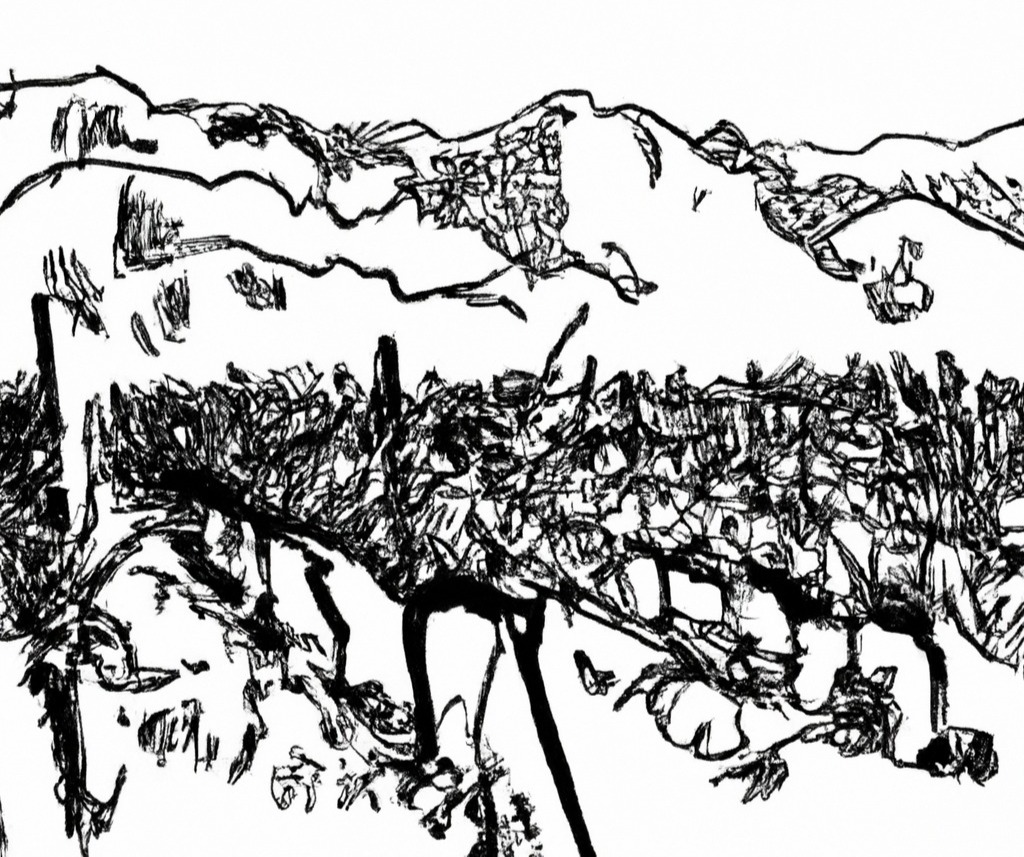
Jurançon occupies the first chain of hills south of Pau, where vineyards overlook the Gave de Pau valley with panoramic views of the Pyrenees. Viticulture has been documented since at least the Middle Ages, and the region gained historical fame when the future King Henry IV of France was christened in 1553 with a few drops of Jurançon wine.
The appellation specializes in white wines produced primarily from Petit Manseng and Gros Manseng. Dry wines emphasize freshness, minerality, citrus, and tropical fruit, while sweet wines rely on naturally concentrated grapes rather than widespread noble rot. Grapes destined for sweet wines are harvested in successive passes, often extending into late November or December, allowing dehydration (*passerillage*) under the influence of the warm, dry föhn wind.
Although relatively small, Jurançon has become internationally recognized for producing some of France's finest long-lived sweet wines, combining richness with exceptionally high natural acidity.
---
## Location
* **Country:** France
* **Region:** Nouvelle-Aquitaine
* **Department:** Pyrénées-Atlantiques
* **Historical Province:** Béarn
* **Nearest City:** Pau
* **Mountain Range:** Western Pyrenees foothills
The appellation covers approximately 25 communes surrounding Pau.
---
## Elevation
Typical vineyard elevations:
* **200–450 m above sea level**
Highest vineyards:
* Approximately **500 m**
---
## Latitude
Approximate geographical extent:
**43.20°–43.35° N**
Longitude:
**0.30° W – 0.05° E**
---
## Inclination
Typical vineyard slopes:
* 5–15%
* 15–30%
* Locally exceeding 35%
The rolling foothills provide excellent natural drainage and favorable air circulation.
---
## Aspect
Preferred vineyard exposures include:
* South
* Southeast
* Southwest
These aspects maximize solar interception, facilitate complete ripening of the late-harvest Petit Manseng grapes, and enhance the drying effects of the warm southerly föhn winds descending from the Pyrenees.
---
# References
1. **Institut National de l'Origine et de la Qualité (INAO).** *Cahier des Charges – Appellation d'Origine Contrôlée Jurançon & Jurançon Sec.*
2. **Organisation Internationale de la Vigne et du Vin (OIV).** *State of the World Vine and Wine Sector.*
3. **Robinson, J., Harding, J., Vouillamoz, J.** *Wine Grapes.* Allen Lane, 2012.
4. **Robinson, J. (Ed.).** *The Oxford Companion to Wine,* 5th Edition, Oxford University Press.
5. **Johnson, H., Robinson, J.** *The World Atlas of Wine,* 8th Edition, Mitchell Beazley.
6. **Institut Français de la Vigne et du Vin (IFV).** Technical publications on South West France viticulture.
7. **Météo-France.** Climate normals for Pyrénées-Atlantiques and Béarn.
8. **Bureau National Interprofessionnel des Vins du Sud-Ouest (InterSudOuest).** Regional production statistics and viticultural information.
9. **BRGM – Bureau de Recherches Géologiques et Minières.** Geological maps of the Jurançon hills and Béarn basin.
10. **European Commission eAmbrosia Register.** Protected Designation of Origin (PDO) specifications for Jurançon and Jurançon Sec.
- Area
620 ha
[SOIL]
Soil
Climate
[CLIMATE]
- Area
620 ha
Subregions...
Region
Jurançon

France
Appellation
Region
Elevation
Aspect
Inclination
Established
Production
Area
Subregions
620 ha
0
Established
Production
Area
Subregions
[ESTABLISHED]
[PRODUCTION]
[AREA]
...
Established
Production
Cellar Master
Kosher
[ESTABLISHED]
[PRODUCTION]
[WINEMAKER]
[KOSHER]
Elevation
[ELEVATION]
Aspect
[ASPECT]
Inclination
[INCLINATION]
Style(s)
[STYLE]
Reference
Wines/Products
[PRODUCTS #]
