

Add a Title
[DESCRIPTION]

Country
Region(s)Country


0
0
Classifications
Add a Title
[DESCRIPTION]
0
[CATEGORY]
[DESCRIPTION]
0
Armenia does not have a formalized, legally defined wine appellation system like France's AOC or Italy's DOCG. However, the country’s wine regions are generally classified based on historical, climatic, and geological characteristics. These regions are recognized by winemakers and researchers as distinct viticultural zones.
### **Definition of Armenia’s Wine Regions**
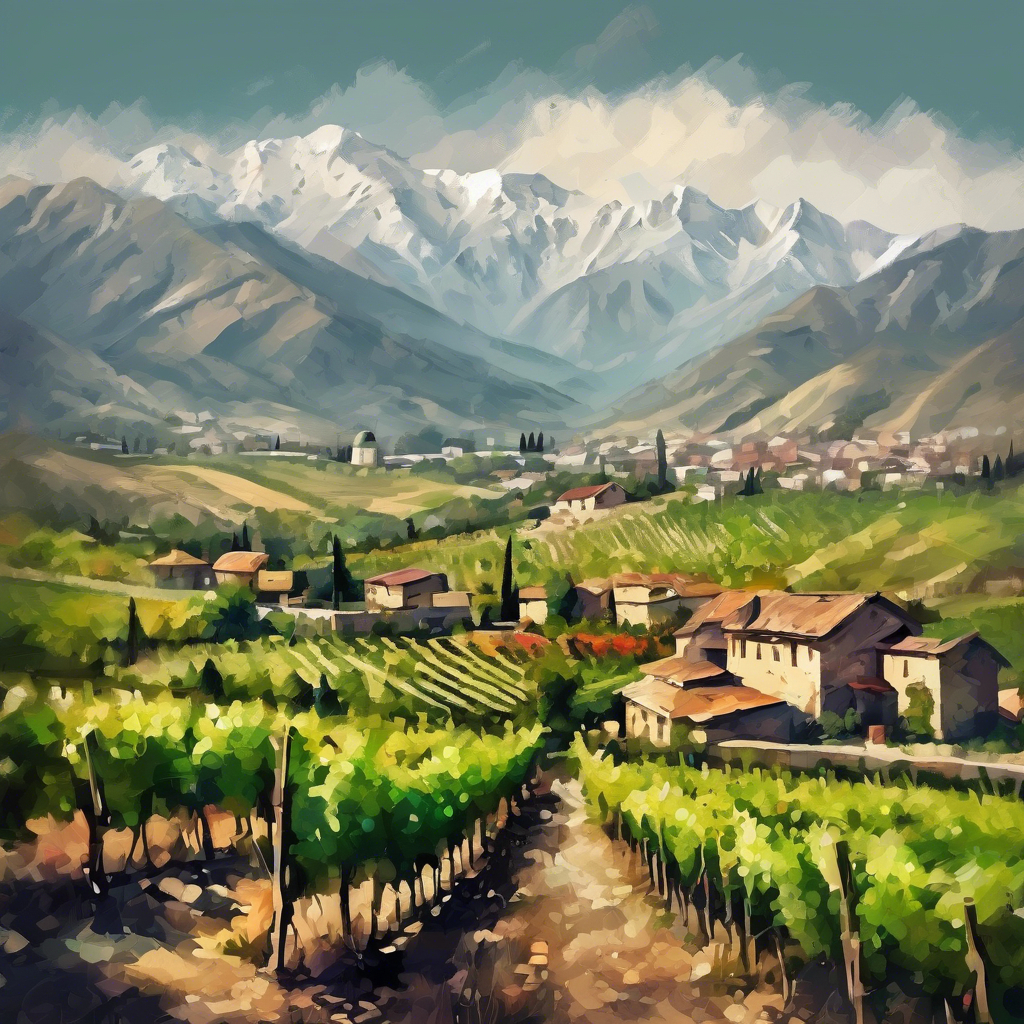
Armenia's wine regions are categorized primarily based on their **altitude, climate, soil composition, and dominant grape varieties**. The country’s high-altitude vineyards, volcanic soils, and continental climate create unique conditions that define its wine identity.
#### **1. Geographical Boundaries**
- **Location:** South Caucasus region, between 38°–41° N latitude
- **Borders:** Georgia (north), Azerbaijan (east), Iran (south), Turkey (west)
- **Total Vineyard Area:** ~17,000 hectares
#### **2. Climate and Geography**
- **Climate:** Predominantly continental, with hot summers and cold winters
- **Altitude:** Vineyards range from 850 to 1,750 meters above sea level, among the highest in the world
- **Rainfall:** 250–700 mm annually, with variations by region
- **Soil Types:** Volcanic, limestone, sandy, and clay-based soils contribute to mineral-driven wines
#### **3. Major Wine-Producing Regions**
Armenia has six recognized wine-producing regions, each with distinct terroirs:
1. **Vayots Dzor**
- The most famous region, known for **Areni Noir**, an ancient red grape variety.
- Home to **Areni-1 Cave**, the world’s oldest known winery (over 6,000 years old).
- High-altitude, volcanic soil, producing elegant, high-acidity red wines.
2. **Ararat Valley**
- Warm, dry climate with fertile volcanic and alluvial soils.
- Key production area for **brandy**, as well as white wine grapes like **Kangun**.
- Lower elevation (850–1,200 m), suitable for high-yield viticulture.
3. **Armavir**
- Continental climate with hot summers and cold winters.
- Mixed volcanic and sandy soils; home to major modern wineries like **Karas Wines**.
- Known for both indigenous and international grape varieties.
4. **Tavush**
- Northernmost region with a more **humid** and **moderate** climate.
- Produces fresh, aromatic **white wines** from grapes like **Lalvari**.
- Lower elevation (500–1,100 m), allowing for softer tannins in red wines.
5. **Artsakh (Nagorno-Karabakh)**
- Limestone and clay soils, ideal for **Khndoghni (Sireni)**, a bold, tannic red grape.
- Warmer climate, allowing for full-bodied red wines.
- A historical winemaking area with deep cultural significance.
6. **Syunik**
- The least developed but promising region.
- Alpine terrain with volcanic influence, ideal for future vineyard expansion.
- Potential for high-altitude winemaking similar to Vayots Dzor.
### **4. Legal and Industry Structure**
- Armenia does not yet have a **Protected Designation of Origin (PDO)** system but follows unofficial geographic indications.
- The **Armenian Viticulture and Winemaking Foundation (AVWF)** works to promote Armenian wines internationally.
- There are efforts to establish a formal **appellation system** to protect and market regional identity.
### **5. Conclusion**
Armenia’s wine regions are defined by their **altitude, soil composition, climate, and indigenous grape varieties**. The country’s unique terroir, combined with its ancient winemaking traditions, positions it as an emerging player in the global wine industry.
=======================================================
Armenia is one of the world’s oldest wine-producing regions, with a winemaking history dating back over 6,000 years. The country is located in the South Caucasus, between Europe and Asia, and has a diverse range of microclimates and terroirs that contribute to its unique wine styles.
### **1. Overview**
- **Latitude:** 38°–41° N
- **Elevation:** 850–1,750 meters above sea level
- **Climate:** Continental, with hot summers and cold winters
- **Annual Rainfall:** 250–700 mm, depending on the region
- **Soil Types:** Volcanic, limestone, clay, loam
- **Grape Varieties:** Indigenous and international
### **2. Key Wine Regions**
Armenia has several distinct wine regions, each offering unique terroirs:
#### **a. Vayots Dzor**
- **Elevation:** 1,000–1,750 m
- **Climate:** Dry continental
- **Soil:** Volcanic, rocky
- **Notable Grape:** Areni Noir (signature red variety)
- **Significance:** Home to the Areni-1 Cave, where the world’s oldest known winery (circa 4,100 BCE) was discovered
#### **b. Ararat Valley**
- **Elevation:** 850–1,200 m
- **Climate:** Hot summers, cold winters
- **Soil:** Sandy, clay, volcanic
- **Notable Grapes:** Khatoun Kharji, Kangun (white varieties)
- **Significance:** Known for high-quality brandy production
#### **c. Armavir**
- **Elevation:** 900–1,200 m
- **Climate:** Continental, with significant diurnal temperature variation
- **Soil:** Sandy, volcanic
- **Notable Grapes:** Haghtanak, Sev Areni (red), Kangun (white)
- **Significance:** Home to many modern wineries
#### **d. Tavush**
- **Elevation:** 500–1,100 m
- **Climate:** Humid, mild winters
- **Soil:** Clay, loam
- **Notable Grapes:** Lalvari (white), Banants (white)
- **Significance:** Known for fresh, aromatic white wines
#### **e. Artsakh (Nagorno-Karabakh)**
- **Elevation:** 600–1,200 m
- **Climate:** Continental
- **Soil:** Limestone, clay
- **Notable Grapes:** Sireni (red, also known as Khndoghni)
- **Significance:** Rich in deep-colored, full-bodied red wines
### **3. Grape Varieties**
Armenia is known for its indigenous grapes, including:
- **Reds:** Areni Noir, Haghtanak, Khndoghni (Sireni), Sev Areni
- **Whites:** Voskehat (Golden Grape), Kangun, Khatoun Kharji, Lalvari
International varieties (Cabernet Sauvignon, Merlot, Chardonnay, etc.) are also cultivated but are less dominant.
### **4. Winemaking Practices**
- **Fermentation:** Traditional clay amphorae (karas) and modern stainless steel
- **Aging:** French and Caucasian oak barrels, as well as aging in karas
- **Irrigation:** Limited due to semi-arid conditions; drip irrigation used in some regions
- **Viticulture:** Many vineyards are phylloxera-free due to sandy and volcanic soils
### **5. Wine Styles**
- **Red Wines:** Typically medium to full-bodied, high acidity, with red berry and spice notes
- **White Wines:** Crisp, mineral-driven, with floral and citrus aromas
- **Amber Wines:** Produced using extended skin contact, offering deep flavors and tannins
- **Brandy:** Renowned Armenian brandy, aged in oak barrels, with smooth and rich flavors
### **6. Industry Development**
- **Key Wineries:** Zorah, Voskeni, Karas, Armenia Wine Company, Old Bridge, Van Ardi
- **Export Markets:** Russia, USA, France, China, EU
- **Wine Tourism:** Growing sector, especially in Vayots Dzor and Ararat Valley
Would you like more details on a specific region or grape variety?
[SOIL]
Soil
Climate
[CLIMATE]
- Subregions
...
Country
Armenia

Armenia
Appellation
Country
Elevation
Aspect
Inclination
Established
Production
Area
Subregions
0
Established
Production
Area
Subregions
[ESTABLISHED]
[PRODUCTION]
[AREA]
...
Established
Production
Cellar Master
Kosher
[ESTABLISHED]
[PRODUCTION]
[WINEMAKER]
[KOSHER]
Elevation
[ELEVATION]
Aspect
[ASPECT]
Inclination
[INCLINATION]
Style(s)
[STYLE]
Reference
Wines/Products
[PRODUCTS #]
MAP
0
