

0
0
0
Kakheti (Kakhetian)
Registration No. 789
Registration date : 10/12/2007
Place of Origin : Kakheti (Kakhetian)
Name of the goods for which registration of the appellation of origin is requested : Wine
Name and address of the applicant : LEPL - National Wine Agency ; Marshal Gelovani Ave. N32, 0159, Tbilisi, Georgia
1. Name: "Kakheti"
2. Additional designations: “Kakhetian”
3. Type, color and basic requirements
"Kakheti" can be white, red, pink, or amber in color, and dry, naturally semi-dry, naturally semi-sweet, or naturally sweet in sugar content.
The organoleptic and physico-chemical characteristics of the wine "Kakheti" must meet the following requirements:
§ Dry white wines - light straw-colored, flawless, delicate in taste, soft, harmonious, cheerful, refined, with a varietal aroma characteristic of this geographical area, with tones of wildflowers. During aging, the wine develops a pronounced bouquet with fruity tones;
§ Red dry wines - dark red, flawless, full-bodied, extractive, velvety, harmonious, with a varietal aroma characteristic of this geographical area. Upon aging, a pronounced bouquet with fruity tones develops;
§ White semi-dry, semi-sweet and sweet wines - light straw-colored, flawless, delicate in taste, soft, harmonious, cheerful, refined, with a varietal aroma characteristic of this geographical location;
§ Red semi-dry, semi-sweet and sweet wines - dark red, flawless, harmonious, velvety, refined, with well-pronounced fruit tones, with a varietal aroma characteristic of this geographical location;
§ Pink wines - from light pink to dark pink, flawless, delicate in taste, soft, harmonious, cheerful, refined, with a varietal aroma characteristic of this geographical location;
§ Amber wines - from dark amber to teal, full-bodied, energetic, extractive and velvety, with a well-expressed varietal aroma, moderate and soft bitterness, which determines its typicality. During aging, the wine develops a pronounced bouquet with fruity tones; it should have a characteristic tannic taste from maceration on chacha;
§ The actual alcoholic strength by volume for dry wine shall not be less than 11.0% , for amber wine - less than 12% , and for semi- dry, semi- sweet and sweet wines - less than 10.5% ;
§ The concentration of the reduced extract mass for white and rosé wines should not be less than 16 g/l , and for red and amber wines - less than 22 g/l ;
§ Titrate acidity, calculated as tartaric acid, must not be less than 3.5 g/l;
§ Other characteristics must comply with the requirements established by Georgian legislation .
4. Geographical area and zones of production
The Kakheti viticulture zone is located in the southeastern part of Georgia - at coordinates 41 ° -42 ° 15' north latitude and 45 ° -46 ° 30' east longitude .
Kakheti is bordered by the Main Caucasus Range to the northeast , the Kartli Range to the west , the Gareji Upland and the Shirak Plateau to the south , and the Nukhi Plain of the Republic of Azerbaijan to the east .
The Kakheti viticulture zone includes the administrative borders of the municipalities of Akhmeta, Telavi, Gurjaani, Sighnaghi, Dedoplistskaro, Kvareli, Lagodekhi and Sagarejo .
5. Grape varieties:
Grapes intended for the production of "Kakheti" must be harvested only in the Kakheti viticultural zone.
White grape varieties are used to produce "Kakheti" white and amber wines - Rkatsiteli, Kakhuri Mtsvane, Kisi, Khikhvi, Mtsvivani Kakhuri, Chitistvala.
Red grape varieties used for the production of "Kakheti" red wine are:
Saperavi, Saperavi Budeshurisebiri, Cabernet Sauvignon.
Red grape varieties are used to produce "Kakheti" pink wine -
Saperavi, Saperavi Budeshuri and Rkatsiteli Pink, Cabernet Sauvignon.
The use of other varieties is not permitted for the production of "Kakheti" .
6. Vineyard cultivation, pruning, shaping and maintenance
§ In the Kakheti viticulture zone, commercial vineyards intended for the wine "Kakheti" must be cultivated at an altitude of 200 - 750 meters above sea level.
§ The distance between rows in a vineyard can be from 1 to 3 meters.
§ The distance between vines in a row is 0.8 - 1.5 meters.
§ Stem height – 60-90 cm.
§ Form of the graft – unilateral or bilateral Georgian, or free.
Vineyard cultivation, vine pruning and shaping , and protection from pests and diseases , as well as soil cultivation, fertilization , and other operations are carried out in accordance with the agrotechnical measures selected by the grape grower .
7. Grape maturity, harvest, transportation
§ “Kakheti” is made only from ripe grapes. The sugar content of the grapes at the time of picking should not be: for dry and semi- dry wines less than 20.0% , for semi- sweet wines less than 22.0 % , and for sweet wines less than 24% .
§ Grapes may only be transported in wooden or plastic boxes, in containers made of stainless steel or painted with special paint .
§ The use of polyethylene bags and/or sacks when transporting grapes is prohibited .
§ During transportation, grapes should be protected as much as possible from possible damage .
8. Grape harvest and wine production
The grape harvest per 1 hectare of vineyard should not exceed:
§ For Rkatsiteli – 12 tons;
§ For Kakhetian greens – 8 tons;
§ For a bag – 8 tons;
§ For Khikhvi – 6 tons;
§ Mtsvivani for Kakheti – 8 tons;
§ For bird's-eye view – 8 tons;
§ For Saperavi – 10 tons;
§ Saperavi for Budeshurisebri – 10 tons;
§ For Cabernet Sauvignon – 10 tons;
§ For Rkatsiteli pink – 10 tons.
The grape harvest per 1 hectare of vineyard should not exceed:
The yield of wine intended for "Kakheti" should not exceed 65 decaliters per ton of grapes.
9. Grape processing, winemaking and bottling
Grapes intended for the production of "Kakheti" must be harvested only from vineyards cultivated in the Kakheti viticultural zone .
Grape processing and winemaking are permitted only within the Kakheti zone , while bottling is permitted outside the Kakheti zone , only on the territory of Georgia.
In addition, the export of wine from the Kakheti viticulture zone for bottling is permitted only under strict accounting and control.
"Kakheti" is made through the complete or partial fermentation of the must or must obtained from the appropriate grape variety .
"Kakheti" is allowed to be placed on the consumer market only in consumer packaging .
In the production of “Kakheti”, only those operations, materials and items that are permitted by Georgian legislation may be used .
10. The connection between the exceptional quality of wine, its reputation and its geographical location
Climate - Three agro-climatic zones are distinguished : subtropical, warm, and moderately warm. The region is divided into fifteen subzones based on the severity of the climate .
The climatic conditions of Kakheti are conducive to quality winemaking. The total amount of atmospheric precipitation during the year is 400 - 800 mm. The duration of the vegetation period is 210 days , and the average temperature during this period is 18.5 ° C. The sum of active temperatures is 3500 - 4000 ° C, the duration of sunlight is 2100 - 2300 hours . Hail is expected in spring and autumn , which often causes significant damage to a particular region .
In the second half of summer , there may be long periods of drought . Winter is moderately cold, cloudy and with little snow. Long frosts (18-20 ° C) harmful to the vine are rare .
Soil - Outdoor Kakheti viticulture is represented in the belt between the southwestern end of the Tsivgombori Mountains and the left and partially right terraces of the Iori River , which is within 450 - 700 m above sea level and includes the Sagarejo, Gurjaani, and Gardabani districts.
In Outer Kakheti , black soil and black soil-like soils with their varieties and differences are mainly represented . Brown and meadow brown soils with their varieties and differences also occupy a fairly significant area . Alluvial-proluvaceous and deluvial soils with their varieties and differences occupy a comparatively smaller area .
The above -mentioned soils differ from each other both in morphological features and in their physical and chemical characteristics. In black earth, black earth, brown and meadow brown soils, the profile thickness is within 50 - 120 cm , while the active humus layer varies within 30 - 60 cm . They are characterized mainly by clayey and heavy loamy mechanical composition. The humus content in the active layer of these soils mainly varies within 2 - 4% , and gradually decreases downwards . They contain medium and small amounts of carbonates and are mainly within 2.5 - 25% , and in some sections it reaches even more . The soil reaction is medium and weakly alkaline , and the pH index is mainly within 7.3-8.2.
Alluvial-proluvial and deluvial soils are represented in a relatively small area in the Outer Kakheti viticulture zone and are mainly found along ravines and in the lower belt of mountain slopes . The profile thickness of these soils exceeds 1 meter , and the active humus layer is within 30 - 50 cm . They are characterized mainly by loamy and heavy loamy mechanical composition, loose grittiness and stonyness. The carbonates are moderately alkaline and the pH indicator is within 7.5 - 8.3 . The humus content in these soils is mainly within 1.5 - 2.55.
The Inner Kakheti zone includes the territories of Gurjaani, Telavi, Akhmeta, Kvareli, partly Sighnaghi, Tsiteltskaro and Lagodekhi districts , which are located on the right and left banks of the Alazani River and represent its second terrace and the end of the northeastern and northwestern slopes of the Tsivgombori Mountains . The zone is located between the end of the southern slopes of the Caucasus Mountains and the end of the northeastern and northwestern slopes of the Tsivgombori Mountains within 350 - 750 m above sea level .
In the Inner Kakheti zone, on the right bank of the Alazani River , brown, meadow brown , black soil, black soil-like, alluvial-proluvious and deluvial soils are represented with their variety and differences.
The profile thickness of brown, meadow brown, black earth and black earth-like soils varies within 60 - 120 cm , while the active humus layer is within 30 - 60 cm . By mechanical composition , they represent loams and heavy loams . They are characterized by loose grit and stonyness, medium and weak carbonates. The reaction of the soil surface is medium and weakly alkaline , and the pH indicator mainly varies within 7.2 - 8.2 . The humus content in the active soil layer is mainly within 2.0 - 4.0%, and gradually decreases downwards .
Alluvial-proluvious and deluvial soils are present on both sides of the Alazani River . The profile thickness of these soils exceeds 1 - 1.5 meters , and the active humus layer is within 40 - 60 cm , they are characterized mainly by clay and heavy loam mechanical composition. In some sections , there are light loams and silts. The humus content in the active layer of these soils is mainly within 1.5-2.5%, and in the lower layers it gradually decreases . The alluvial - proluvious and deluvial soils present on the right side of the Alazani River mainly contain carbonates in medium and small amounts (within 4.5-25.0 % ), while these soils present on the left side of the Alazani River do not contain them at all or, in exceptional cases, are present only in insignificant small amounts (within 0.5-2% ). The soil pH reaction in these soils on the right side of Alazani is within 7.3 - 8.2 , while in the soils on the left side of Alazani it varies within 6.2 - 7.0 .
Human factor - Based on historical-ethnographic and archaeological research , it has been established that the viticulture and winemaking industry in Georgia has an 8,000 -year history .
The first important materials for the research and description of this field belong to Vakhushti Bagrationi (XVIII).
At the beginning of the 19th century , immediately after the conquest of Georgia , the central government of Russia began to take care of the development of viticulture and winemaking . By its instructions , in order to increase the efficiency of the sector , the study of the existing viticulture was entrusted first to the Hungarian Martin (1807), then to the advisor of the Caucasus region Stevens (1811) and others. During the same period, about 90 vineyards were transferred to treasury ownership.
In the 18th-19th centuries , such large and famous viticulture and winemaking farms operated in Georgia as the estates of the nobles - A. Chavchavadze , A. Jambakur-Orbeliani, S. Leonidze, General Mirsky, Z. Jorjadze, Orbeliani , Chijavadze, S. Vorontsov, Mukhran Batoni, D. Chavchavadze and others . By the end of the century , these farms had almost completely passed into the ownership of the Department of Princely Estates , where both the agricultural culture of vineyard care and winemaking technology were much higher .
The sector's exceptional, rapid development began in the 1920s , when several effective reforms were implemented in agriculture . During the same period, the severe consequences of phylloxera were overcome and rapid growth began.
Cultivation of new vineyards with grafted vine seedlings :
In 1890 , the Sakar American Vine Nursery was established ;
In 1922 , the Kakheti Zone Viticulture and Winemaking Experimental Station was established in the village of Uriatubani , Gurjaani District ;
In 1920 , the Department of Viticulture was opened at Tbilisi State University , and in 1925 , the Department of Oenology;
In 1930 , the Agricultural Institute (educational) was established ;
In 1931 , the Union Scientific-Research Institute of Viticulture and Winemaking was established , which was moved to Telavi, Kakheti , in 1932 ;
Scientific activity began in the 1920s .
Georgian scientists have made a great contribution to the development of the field : Solomon Cholokashvili, Konstantine Modebadze, Valerian Kantaria, Maxime Ramishvili, Revaz Ramishvili, Valeria Ghvaladze, Andro Lashkh , and others.
The field of viticulture and winemaking was gradually staffed with specialists trained in these scientific centers and by these famous scientists , who developed the field, introduced new technologies and modern machinery , and created new brands of wines, such as: “Tsinandali”, “Gurja- Ani”, “Nafareuli”, “Teliani”, “Vazisubani” and others.
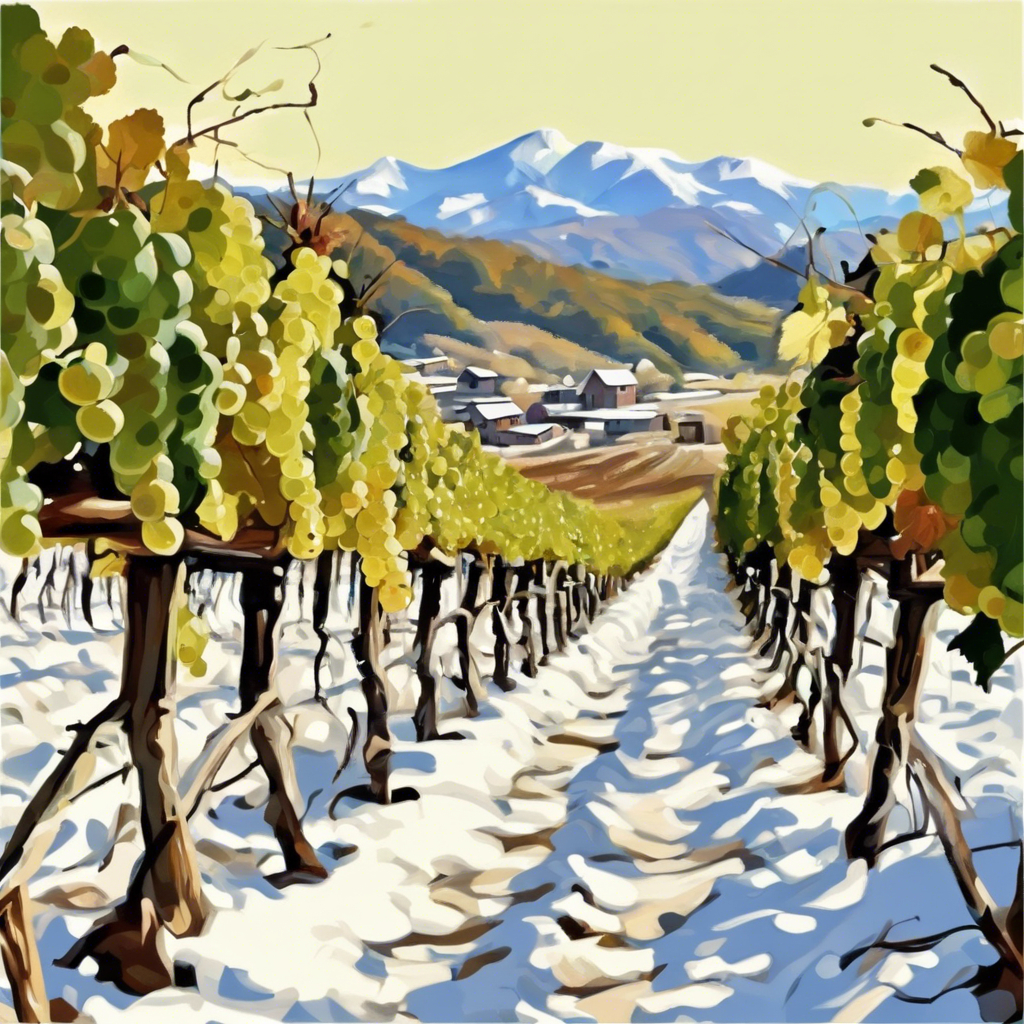
The geographical location of the Kakheti viticulture zone , the climate characteristic of the region : moderately warm winters and hot summers, moderate amounts of precipitation , a variety of soils , specific properties of grape varieties , and the local, centuries- old tradition of viticulture and winemaking determine the high reputation and organoleptic characteristics of “Kakheti” wines .
11. Special labeling requirements
The name “Kakheti” and the indication “ Wine with Protected Designation of Origin ” will be placed on the label, packaging, as well as in the documents accompanying the wine and in advertising materials in foreign languagesas follows:
In Latin script – KAKHETI or KAKHETI WINE Protected Designation of Origin and/or PDO
რუსული შრიფტით – KAKHETI ან KAKHETI WINE Protected name of place of origin
12. Registration and notification
The technological processes of production and storage of “Kakheti” are recorded and reported in accordance with the rules established by Georgian legislation .
13. Key Control Points
During the control of the production process of the protected designation of origin wine “Kakheti”, the producer must confirm to the LEPL – National Wine Agency the compliance with the following parameters:
Main checkpoints
Evaluation methods
Vineyard location
Cadastral map, on-site inspection
Area
Vineyard registration journal, cadastre
Grape variety
Vineyard accounting journal, on- site inspection
Cultivation methods
Agrotechnical measures registration journal , medication journal. On -site inspection
Harvesting and transportation
Vintage magazine
Grape yield per hectare
Vintage magazine
Total grape harvest
Vintage magazine
Grape processing and winemaking
Grape receipt log, grape processing log, product turnover log , laboratory analysis logs , notifications, on-site inspection
Place and conditions for bottling, packaging and storage of wine
Casting log, finished goods warehouse product movement log , laboratory analysis logs
Physico-chemical characteristics of wine during the winemaking process, before and after bottling
Laboratory analysis logs
Organoleptic characteristics of wine
Tasting Commission Minutes
Traceability
Technological and laboratory records
14. Production control body
State control over the observance of production specifications and the correct use of the designation of origin is exercised by the LEPL - National Wine Agency in accordance with the rules established by the legislation of Georgia .
📷
[SOIL]
Soil
Climate
[CLIMATE]
0
0
Classifications
- Subregions
...
Region
Kakheti

Georgia
Appellation
Region
Terroir
Elevation
Aspect
Inclination
Established
Production
Area
Subregions
0
Reference
Wines/Products
[PRODUCTS #]

Kakheti
2


[APPELLATION]
MAP
0
