

0
0
0
Lechkhumi
Registration No. 987
Registration date : 07/04/2025
Appellation of Origin : " Lechkhumi "
Name of the product for which the designation of origin is registered: Wine
Name and address of the applicant : LEPL National Wine Agency ; Marshal Gelovani Ave. No. 6, 0159, Tbilisi, Georgia
1. Name : Lechkhumi
2. Additional notes :
3. Type , color and basic requirements
Lechkhumi wine is a dry wine that can be white or amber in color .
Wine " Lechkhumi " white dry must meet the following requirements :
- Color – light straw to straw ;
- Aroma and taste – intense , yellow fruit tones , particularly pear and ripe apple , as well as citrus . Full on the palate , with refined , lively acidity , the wine develops aromas of dry herbs and dried fruits upon aging ;
- The actual alcoholic strength by volume shall not be less than 11.0% ;
- Sugar content should not exceed 4.0 g / l ;
- Titrate acidity should not be less than 5 g / l ;
- Volatile acidity should not exceed 1.0 g / l ;
- The concentration of the reduced extract mass should not be less than 16.0 g / l ;
- The total mass concentration of sulfur dioxide shall not exceed 200.0 mg / l ;
- Other characteristics must comply with the requirements established by Georgian legislation ( Technical Regulations “ On the General Rules of Wine Production and the Determination of the List of Permitted Processes , Materials and Substances ” approved by Resolution No. 524 of the Government of Georgia of November 6 , 2018).
Wine "Lechkhumi" amber dry must meet the following requirements:
- Color – dark amber to straw-colored;
- Aroma and taste – full-bodied, extractive, with medium acidity and pronounced tannins, with a dried fruit aroma of gourds (plums, apricots), developing the aroma of liqueur and gourd jam upon aging ;
- The actual alcoholic strength by volume shall not be less than 11.0%;
- Sugar content should not exceed 4.0 g/ l ;
- Titrate acidity should not be less than 4 g/l;
- Volatile acidity should not exceed 1.2 g/ l ;
- The concentration of the reduced extract mass should not be less than 20.0 g/l ;
- The total mass concentration of sulfur dioxide must not exceed 150.0 mg/l;
- Other characteristics must comply with the requirements established by Georgian legislation (Technical Regulations “On the General Rules of Wine Production and the Determination of the List of Permitted Processes, Materials and Substances” approved by Resolution No. 524 of the Government of Georgia of November 6, 2018).
4. Geographical location and zones of production
The Lechkhumi wine microzone is located in Lechkhumi and includes the area of favorable soil and climatic conditions for viticulture in the Rioni , Lajanuri and Tskhenistskali valleys within the administrative borders of the Tsageri municipality .
5. Grape varieties
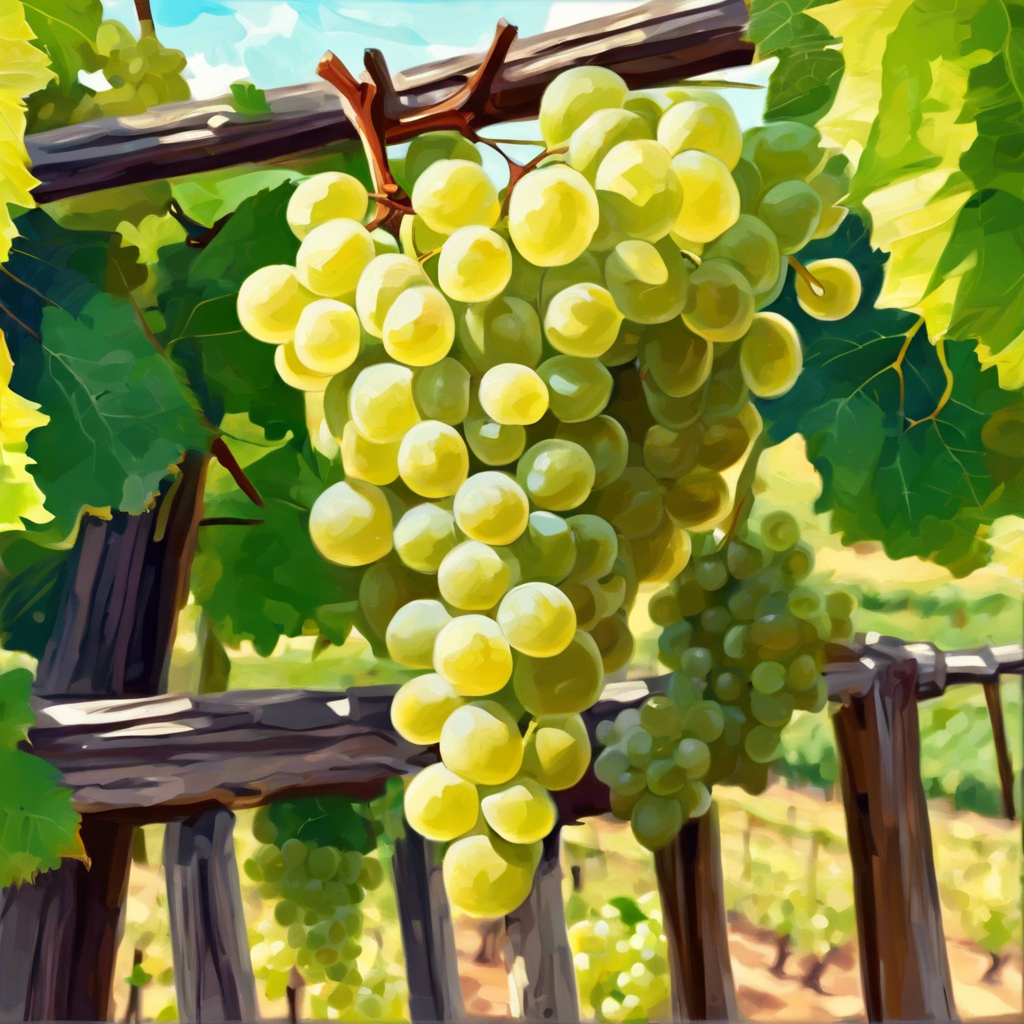
Wine " Lechkhumi " can be made only from Tsolikouri grape variety grown in the appropriate microzone . The use of other varieties is not permitted .
6. Vineyard cultivation, pruning, shaping and maintenance
- In the Lechkhumi microzone, commercial vineyards intended for the wine " Lechkhumi " must be cultivated at an altitude of 400 - 800 meters above sea level ;
- The distance between vineyard rows can be from 1 to 2.5 meters ;
- The distance between vines in a row is 0.8 - 1.5 meters ;
- Stem height – 60 - 90 cm ;
Pruning form – unilateral or bilateral , Georgian or free .
Vine cultivation, its pruning and shaping, and protection from pests and diseases, as well as soil cultivation, fertilization, and other operations are carried out in accordance with the agrotechnical measures selected by the grape grower.
7. Grape maturity , harvest and transportation
Wine " Lechkhumi " is made only from ripe grapes . The sugar content of the grapes at the time of picking should not be less than 19% . Grapes may be transported only in wooden or plastic boxes , in stainless steel or specially painted boxes .
The use of polyethylene bags and / or sacks when transporting grapes is prohibited .
During transportation, grapes should be protected as much as possible from possible contamination .
8. Grape harvest and wine production
The grape harvest per 1 hectare of vineyard should not exceed 10 tons ;
The wine solution should not exceed :
- 650 liters – from one ton of grapes ;
- 6500 liters – from one hectare of vineyard .
9. Grape processing , winemaking and bottling
Grapes intended for the production of " Lechkhumi " must be harvested only from vineyards planted in the Lechkhumi microzone .
Grape processing, winemaking , and bottling are permitted only within the Lechkhumi microzone .
Lechkhumi wine is made through the complete alcoholic fermentation of free-flowing sweet grapes.
Wine " Lechkhumi" amber dry is made in a qvevri (jar) by means of complete alcoholic fermentation of durdo. In addition, the chacha -claret content in durdo should be within 5-6%. After the completion of alcoholic fermentation, the qvevri is filled with similar wine and left in durdo for no less than December 31 of the same year.
In the production of “ Lechkhumi ” , only those operations , materials and substances that are permitted by the Technical Regulation “ On the General Rules of ProductionWine and the Determination of the List of Permitted Processes , Materials and Substances ” approved by Resolution No. 524 of the Government of Georgia of November 6 , 2018 are permitted .
" Lechkhumi " is allowed to be sold on the consumer market only in glass bottles .
10. The connection between the exceptional quality of wine , its reputation and its geographical location
Climate – characterized by a humid climate , moderately cold winters and warm summers . The annual duration of sunlight is 1750-1900 hours . The average annual air temperature is +11.4 ° C. The average temperature of the warmest month ( August ) is 22.2 ° C, and the coldest month ( January ) is - 0 ° C.
The duration of the vegetation period is 209 days . The active temperature averages 3700 ° - 3900 ° C.
The annual total precipitation is 1100 mm .
The number of hail days during the growing season is 0.8 ( Tsageri ) . Hail occurs relatively frequently in May and June .
Due to the meridian direction of all three valleys of the microzone , winds blow mainly along the valley . They belong to the regions of weakly acting winds group III .
Soil – mainly represented are humus - carbonate soils, which are characterized by high porosity. Slightly porous and non-porous soils are found mostly on marls. Deluvial and ochre soils are also found in quantitiessmall .
In terms of mechanical composition , soils mainly belong to heavy loams and clays .
The humus content in these soils is characterized by a low level and is on average within 2.5-1.5% in the active layer .
The soil reaction is mostly neutral.
Human factor – Despite the fact that Lechkhumi is considered one of the best viticulture and winemaking regions in Georgia, historical information about them is quite scarce. According to some literary sources, we can conclude that these branches of agriculture have played an important role in the economic life of this region since ancient times. This is indicated by the diversity of local grape varieties and the abundance of winemaking products that local residents prepared using various methods.
The rapid development of the industry in Lechkhumi since the 1950s was facilitated by the commissioning of primary wineries with fairly modern technical equipment for that time in Tvishi, Okureshi, Orbeli and Tsageri, which, in turn , led to the provision of the industry with highly qualified specialists. Local winemakers made a great contribution to Lechkhumi winemaking: Mikheil Kvirikashvili, Tariel Gugava, Zhora Chachkhian, Jemal Akhvlediani, Akaki Motsonelidze , Jeyran Chakvetadze and others.
The Kutaisi bottling plant bottled the wine "Lechkhumi" produced by the above-mentioned factories during the Soviet period.
Thus, the special geographical location of the mentioned microzone, the microclimate created on the sloping slopes of the Tskhenistskali, Lajanuri and Rioni river valleys, humus-quartz and limestone-rich loamy soils, high heat absorption capacity, the sum of quite high active temperatures, as well as high summer temperatures, hot autumn days and cold nights ensure a significant increase in the concentration of sugars. All this positively affects the aroma and taste of the wine and gives it tones of yellow fruit, in particular pears and ripe apples, as well as citrus, sophistication, cheerful acidity and fullness of taste.
11. Transitional provisions
Grape processing, winemaking , and bottling are permitted outside the Lechkhumi microzone , only on the territory of Georgia , until December 1, 2025.
12. Special labeling rules
The name “ Lechkhumi ” and the designation “ Protected Designation of Origin Wine ” will be placed on the label , packaging , as well as in the documents accompanying the wine and in advertising materials in foreign languages as follows :
In Georgian – Lechkhumi
Protected designation of origin
In English – Lechkhumi
Protected Designation of Origin and/or PDO
In Russian – Lechkhumi
Protected designation of origin
13. Registration and notification
The registration and reporting of technological processes for the production and storage of “ Lechkhumi ” is carried out in accordance with the “ Mevena Valley - Rules for Registration and Reporting of Technological Processes in PracticeWinemaking ” approved by Order No. 2-78 of the Minister of Environmental Protection and Agriculture of Georgia dated January 24 , 2019 .
14. Key Control Points
During the control of the production process of the protected designation of origin wine “ Lechkhumi ” , the producer must confirm to the LEPL – National Wine Agency the compliance with the following parameters :
Main checkpoints
Evaluation methods
Vineyard location
Cadastral map , on-site inspection
Area
Vineyard registration journal , cadastre
Grape variety
Vineyard accounting journal , on-site inspection
Cultivation methods
Agrotechnical activities registration journal , medication journal . On-site inspection
Harvesting and transportation
Harvest magazine
Grape yield per hectare
Harvest magazine
Total grape harvest
Harvest magazine
Grape processing and winemaking
Grape receipt log , grape processing log , product turnover log , laboratory analysis logs , notifications , on - site inspection
Place and conditions for bottling , packaging and storage of wine
Casting journal , finished goods warehouse product movement journal , laboratory analysis journals
Physico - chemical characteristics of wine during the wine production process, before and after bottling
Laboratory analysis logs
Organoleptic characteristics of wine
Tasting Commission Minutes
Traceability
Technological and laboratory records
15. Production control body
State control over the observance of the production specification and the legitimate use of the designation of origin is exercised by the LEPL - National Wine Agency in accordance with the “ On Approval of the Procedure for State Control over the Production of Wine with a Protected Designation of Origin , Spirits with a Protected Designation of Origin, Wine with a Protected Geographical Indication and Spirits with a Protected Geographical Indication ” approved by Order No. 2-1008 of the Georgian Ministry of Environmental Protection and Agriculture of December 13, 2018.
📷
[SOIL]
Soil
Climate
[CLIMATE]
0
0
Classifications

- Established
2025
Subregions...
Protected Designation of Origin
Lechkhumi (ლეჩხუმი)

Georgia
Appellation
Protected Designation of Origin
Terroir
Elevation
Aspect
Inclination
Established
Production
Area
Subregions
2025
0
Reference
Wines/Products
[PRODUCTS #]

Lechkhumi (ლეჩხუმი)
1


[APPELLATION]
MAP
0
