

0
0
0
Morocco’s wine industry is one of the oldest in the world, with a history dating back to Phoenician and Roman times. Today, it is a significant player in North African viticulture, producing a variety of wines influenced by its unique climate, terroir, and French winemaking heritage.
#### **1. Climate & Geography**
- **Climate:** Predominantly Mediterranean with strong Atlantic and continental influences. Hot, dry summers are tempered by ocean breezes and altitude in some regions.
- **Latitude:** Between 30°N and 35°N, similar to California and parts of Spain.
- **Annual Rainfall:** Varies from 200mm to 800mm, with coastal areas receiving more precipitation.
- **Altitude:** Many vineyards are planted at elevations between 400m and 1,200m, which helps regulate temperatures and retain acidity in grapes.
#### **2. Key Wine Regions (AOG - Appellations d’Origine Garantie)**
Morocco has over **14 AOGs** and **one AOC (Appellation d’Origine Contrôlée)**.
##### **a) Meknès (including AOC Les Coteaux de l’Atlas)**
- **Terroir:** Considered the most prestigious wine region, benefiting from altitude (up to 700m) and fertile soils.
- **Soils:** Limestone, clay, and sandy soils.
- **Grapes:** Cabernet Sauvignon, Syrah, Merlot, Chardonnay.
- **Style:** Produces some of the finest Moroccan wines, including bold reds and complex whites.
##### **b) Benslimane**
- **Location:** Near Casablanca, benefiting from the cool Atlantic breeze.
- **Soils:** Sandy and clay-based.
- **Grapes:** Cinsault, Carignan, Grenache, and Syrah.
- **Style:** Lighter reds and rosés, often fruit-forward.
##### **c) Zenata**
- **Location:** Coastal, between Rabat and Casablanca.
- **Climate:** Cool maritime influence.
- **Grapes:** Grenache, Cabernet Sauvignon, Sauvignon Blanc.
- **Style:** Fresh whites and structured reds.
##### **d) Berkane**
- **Location:** Northeast Morocco, near the Mediterranean.
- **Climate:** Hot summers but moderated by Mediterranean breezes.
- **Grapes:** Grenache, Syrah, Muscat.
- **Style:** Aromatic whites and fruity reds.
##### **e) Essaouira**
- **Location:** Along the Atlantic coast.
- **Climate:** Maritime, with strong winds affecting vineyard conditions.
- **Grapes:** Mourvèdre, Grenache, and Muscat.
- **Style:** Primarily rosés and light-bodied reds.
#### **3. Grape Varieties**
- **Red Varieties:** Syrah, Grenache, Carignan, Cinsault, Cabernet Sauvignon, Merlot, Mourvèdre.
- **White Varieties:** Chardonnay, Sauvignon Blanc, Muscat, Clairette, Viognier.
#### **4. Viticulture & Winemaking Techniques**
- **Training Systems:** Traditional gobelet (bush vine) and modern trellising (espalier) for improved canopy management.
- **Irrigation:** Limited but increasingly used due to climate change; drip irrigation in some vineyards.
- **Winemaking Style:** French-influenced, with many estates using oak aging for reds and stainless steel for whites.
- **Key Producers:** Domaine de la Zouina, Château Roslane, Thalvin (Domaine Ouled Thaleb).
#### **5. Production & Market Trends**
- **Total Vineyard Area:** ~50,000 hectares, with around 10% dedicated to wine production.
- **Annual Wine Production:** 40-50 million bottles.
- **Main Export Markets:** France, Belgium, the UK, and China.
- **Wine Types:** 75% red, 20% rosé, 5% white.
==========================================
Below is an integrated technical profile of Morocco’s wine regions that draws on a range of current sources:
---
## Geography & Climate
- **Location & Influence:**
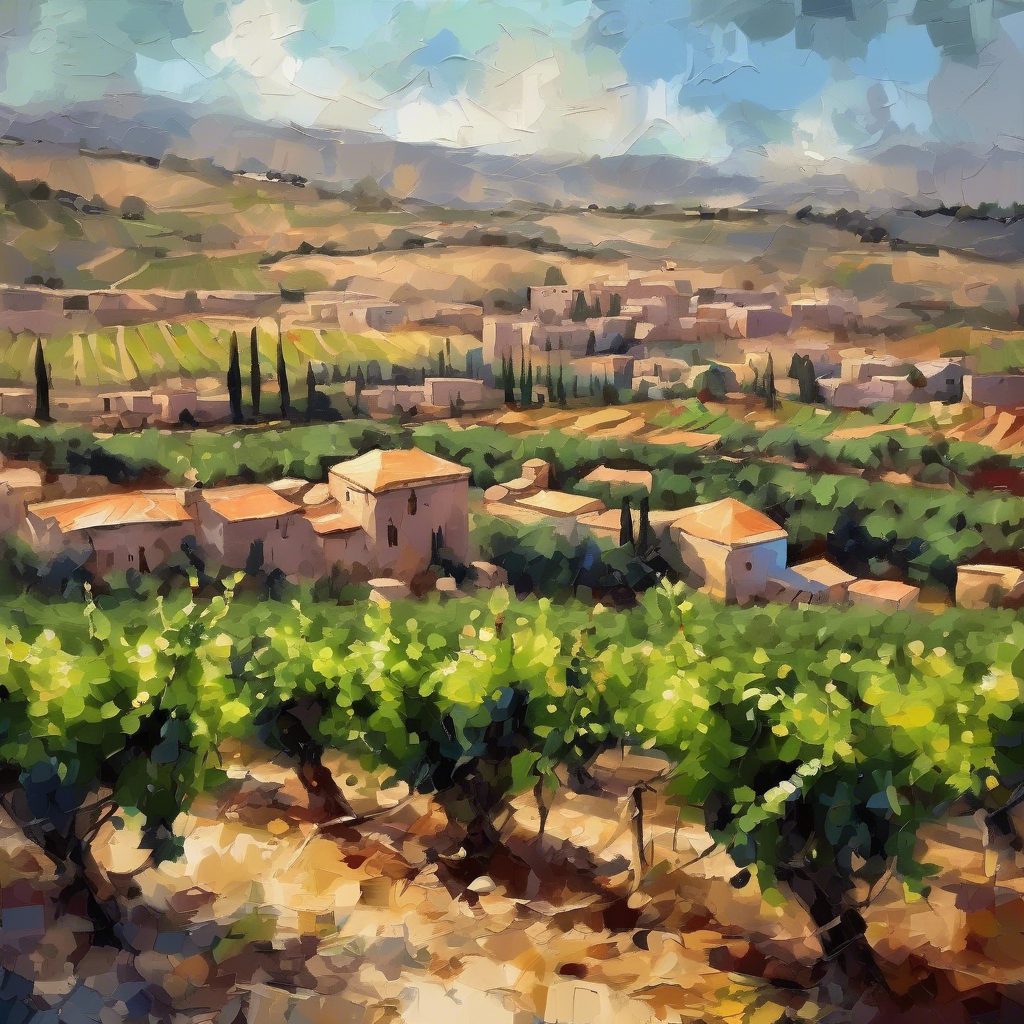
Morocco’s vineyards benefit from a unique blend of Mediterranean sunshine and the cooling influence of the Atlantic Ocean, with many vineyards nestled in the foothills of the Atlas Mountains. This combination creates moderate growing conditions even in a generally warm country.
- **Climate Characteristics:**
– Generally classified as “semi-arid Mediterranean” with maritime moderation.
– High daytime temperatures (often exceeding 35–40°C in summer) are balanced by cooler nights and coastal breezes, helping preserve grape acidity.
– In terms of the Winkler Index, certain areas (particularly in inland parts) fall into the warmer Region V, though Atlantic influences often moderate the heat.
- **Soils & Topography:**
– Vineyards are often planted on clay-limestone soils that provide good drainage and minerality.
– Some regions also feature sandy soils (especially near coastal areas) and varied altitudes—from around 400 m up to 1,200 m—offering a range of microclimates.
---
## Wine Regions & Appellations
Morocco is divided into five main wine regions, which are further subdivided into 14 Appellation d’Origine Garantie (AOG) areas and a few controlled designations (AOC):
1. **Eastern Region:** Includes appellations such as Beni Sadden, Berkane, and Angad.
2. **Meknès/Fès Region:** Home to key AOG areas like Guerrouane, Beni M’tir, Saiss, and Zerhoune, as well as the premier AOC designation (e.g., Côteaux de l’Atlas 1er cru).
3. **Northern Plain:** Represented by areas like Gharb.
4. **Rabat/Casablanca Region:** Encompasses appellations such as Chellah, Zemmour, Zaër, Zenatta, and Sahel.
5. **El-Jadida Region:** Includes the Doukkala appellation.
This structured classification system underscores Morocco’s commitment to quality and terroir expression, a revival driven by renewed foreign investment and modern viticultural practices.
citeturn0search10
citeturn0search9
---
## Grape Varieties
- **Traditional Red Varieties:**
– Historically, Carignan, Cinsaut, and Grenache have dominated.
– Today, red production accounts for over 75% of output.
- **Modern and International Varieties:**
– Cabernet Sauvignon, Syrah, and Merlot have been increasingly introduced, enhancing structure and complexity.
- **Other Styles:**
– Rosé (and the uniquely styled vin gris) makes up roughly 20% of production.
– White wines are a smaller segment (around 3%), typically featuring varieties like Clairette blanche, Muscat, Chardonnay, and Sauvignon blanc.
– Indigenous varieties such as Taferielt also contribute to Morocco’s viticultural heritage.
---
## Viticulture & Winemaking Techniques
- **Vineyard Practices:**
– Many vineyards use traditional bush training as well as modern trellising to optimize canopy management.
– Given the challenges of high temperatures and limited water resources, irrigation (often drip systems) is increasingly important, along with techniques that limit sunburn and overexposure.
- **Winemaking Style:**
– A blend of traditional practices and French winemaking technology is common.
– Fast processing (often within 30 minutes from harvest to press) and controlled extraction help produce wines with balanced fruit, structure, and acidity.
- **Quality Improvements:**
– Investments and modern techniques have led to a renaissance in quality, positioning Moroccan wines to appeal both to local consumers and international markets.
---
## Production & Market Trends
- **Scale & Consumption:**
– While historical production peaked during the colonial era, recent figures indicate production in the order of several hundred thousand hectoliters.
– Most of the wine is consumed domestically, with exports (primarily to France and select other markets) representing a smaller share.
- **Industry Revitalization:**
– After a period of decline post-independence, the industry has been revitalized since the 1990s through partnerships with international wine companies, state reforms, and renewed local interest.
---
This technical profile illustrates how Morocco’s unique blend of climate, diverse terroirs, and evolving viticultural practices has reestablished it as a dynamic wine-producing region in North Africa.
citeturn0search10
- Elevation
400 - 1,200 m
[SOIL]
Soil
Climate
Hot
Mediterranean
Dry
0
0
Classifications

- Subregions
...
Elevation400 - 1,200 m
Country
Morocco
Morocco
Appellation
Country
Terroir
Elevation
400 - 1,200 m
Aspect
Inclination
Established
Production
Area
Subregions
0
Reference
Wines/Products
[PRODUCTS #]

Morocco
1


[APPELLATION]
MAP
0
