Type
Cross
ANALOGUE

ANALOGUE
Cross
ANALOGUE
ANALOGUE
.jpg)

.jpg)
1946 - 1960
E. S. Komarova | M. P. Tsebriy | A. N. Kostyuk | P. K. Ayvazyan | E. N. Dokuchaeva
Tairov National Research Centre for Viticulture and Winemaking, Odessa, Ukraine
Ukraine

Add a Title
Add a Title

Add a Title
Add a Title
Add a Title
Add a Title

0
.jpg)
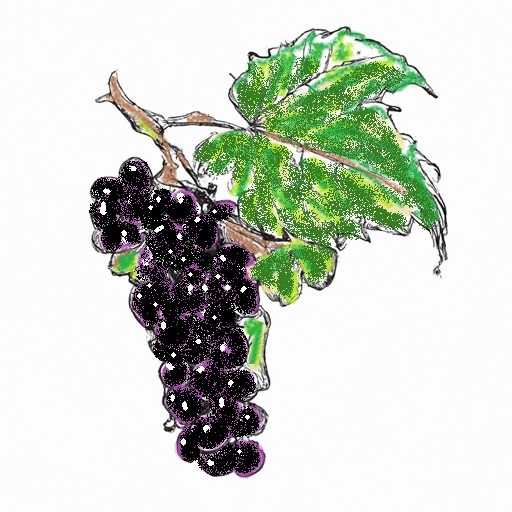
Technical red grape variety.
Medium-dissected leaves with sharp teeth, sparse bristly pubescence, and downward-curved edges of the lobes; conical or branched cluster; medium-sized
round black berries with intensely colored juice; vigorous bush growth; late ripening period, but is a high-yielding.
Does not tolerate winter.
=======================================================================================
A **Soviet interspecific hybrid grape** bred for **yield, resilience, and adaptability**, primarily used as a **table grape** with secondary use in simple wine production and breeding programs.
Developed during mid-20th century USSR breeding initiatives, “40 let Oktyabrya” was intended for **mass agricultural systems (kolkhoz/sovkhoz)**. It combines **vigorous growth, stable yields, and moderate disease resistance**, making it suitable for regions with climatic risks where pure *Vitis vinifera* struggles
### **Aroma and Taste Characteristics**
* Neutral to lightly fruity
* Red berries (currant, raspberry)
* Plum notes
* Mild herbaceous tone
* Low tannin intensity
### **Cluster Profile**
* Medium to large
* مخروط (conical)
* Moderately compact
---
### **Sugar**
160–190 g/L
### **Acidity**
5–7 g/L
### **Tannins**
Low (if vinified)
### **Wine Styles**
* Simple red table wines
* Bulk/blending wines
* Occasionally домашнее (home-style) wines
===============================================================
**“40 let Oktyabrya”** is a **Soviet-era grape variety**, named in honor of the 40th anniversary of the October Revolution.
## Technical profile
**Title:** 40 let Oktyabrya
**Synonyms:** Sorok let Oktyabrya / 40 Years of October
**Type:** Dual-purpose (table–wine, though mostly table use)
**Origin:** USSR (mid-20th century breeding programs)
**Genetic Background:** Hybrid (exact pedigree not always consistently documented; typical of Soviet interspecific breeding involving *Vitis vinifera* × American species)
---
## Ampelographic characteristics
* **Cluster:** Medium to large, conical, moderately compact
* **Berry:** Medium to large, round to slightly oval
* **Skin color:** Dark red to black
* **Skin:** Relatively thick (good transport and storage ability)
* **Pulp:** Fleshy, juicy
---
## Agronomic traits
* **Ripening:** Mid-season
* **Yield:** High and stable
* **Vigor:** Strong
* **Fertility:** Good (often 1.2–1.6 clusters per shoot)
* **Disease resistance:**
* Moderate resistance to fungal diseases (better than pure *vinifera*)
* Some tolerance to cold (typical for Soviet hybrids)
* **Climate adaptation:** Suitable for continental climates (Ukraine, Moldova, southern Russia, Central Asia)
---
## Chemical parameters (typical range)
* **Sugar:** ~160–190 g/L
* **Acidity:** ~5–7 g/L
* **Potential alcohol:** ~9–11% (if vinified)
* **pH:** ~3.2–3.5
---
## Wine & sensory profile
Although mainly a **table grape**, it can be used for simple wines:
* **Color:** Light ruby to medium red
* **Aromas:** Neutral to slightly fruity (red berries, plum)
* **Taste:** Mild, soft acidity, uncomplicated
* **Structure:** Low tannin, easy-drinking
👉 Not considered a premium wine variety; primarily valued for **productivity and resilience** rather than complexity.
---
## Viticultural role & significance
* Part of a broader Soviet effort to create:
* **High-yielding**
* **Cold-tolerant**
* **Disease-resistant** grapes
* Widely planted in **collective farms (kolkhoz/sovkhoz systems)**
* Today, it is mostly of **historical and regional interest**, with limited commercial prominence
=====================================================
40 let Oktyabrya (Сорок лет Октября)
### **Subtitle**
Soviet-era hybrid grape variety named after the 40th anniversary of the October Revolution
### **Brand**
Not applicable (generic varietal; no proprietary ownership)
### **Varieties / Composition**
Interspecific hybrid (*Vitis vinifera* × American species; exact pedigree not definitively standardized in public registries)
---
### **Introduction / Description**
“40 let Oktyabrya” is a **mid-20th century Soviet hybrid grape** developed within state breeding programs focused on **yield stability, climatic resilience, and disease tolerance**. It was widely cultivated in collective agriculture systems and primarily used as a **table grape**, with occasional use for simple red wine production.
---
### **Style(s)**
* Table grape (primary)
* Simple red wine (secondary, low complexity)
---
### **Reference(s)**
* Soviet ampelographic catalogs (mid–late 20th century)
* Regional viticultural institute publications (Ukraine, Moldova, Southern Russia)
---
### **Producer(s)**
* Historically: Kolkhoz / Sovkhoz farms
* Currently: Small private growers in post-Soviet regions
---
### **Alcohol Level (ABV)**
* Potential: 9–11% (if vinified)
### **Ageing**
* Typically none required
* Consumed young
### **Vintage**
Non-vintage (table use); vintage applies only if vinified
---
### **Sugar (g/L)**
160–190 g/L
### **Acidity (g/L)**
5–7 g/L
### **pH**
3.2–3.5
---
### **Classification(s)**
* Hybrid grape variety
* Dual-purpose grape
### **Designation(s)**
No PDO/AOC/DO classification
---
### **Color**
Dark red to black (berry skin)
### **Characteristics of Taste and Aroma**
* Neutral to mildly fruity
* Notes of red berries, plum
* Soft acidity, low tannin (in wine)
### **Tint Type**
Red / dark-skinned grape
---
### **Is Kosher**
Not inherently (depends on vinification process)
---
### **Winemaker Note**
Better suited for **fresh consumption or bulk production**; lacks phenolic depth for premium winemaking but useful for **blends or basic table wines**.
---
### **Technology**
* Standard vineyard management for hybrids
* Moderate spraying required (lower than *vinifera*)
* Often trained for high yield systems
---
### **Ageing Potential**
* Table grapes: immediate consumption
* Wine: 1–2 years (short-lived)
---
### **Maceration**
* Short (3–5 days) if used for wine
* Minimal extraction typical
### **Fermentation**
* Stainless steel fermentation
* Controlled temperature (~22–26°C)
* Standard yeast strains
---
### **Regions**
* Ukraine
* Moldova
* Southern Russia
* Central Asia (limited)
---
### **Producers**
* Small-scale regional vineyards
* Amateur/home winemakers
---
### **Price**
* Low (budget segment)
---
### **Category**
Grape variety
### **Parent Category**
Hybrid wine & table grapes
---
### **Harvest**
* Mid-season (typically late August – September depending on region)
---
## **Sensory Evaluation (Wine Form)**
### **Tasting Note**
Simple, fruit-forward, rustic wine with moderate freshness and limited structure.
### **Limpidity**
Clear
### **Color Intensity**
Medium
### **Aroma(s)**
Red berries, plum, light vegetal hints
### **Condition**
Clean
### **Aroma Intensity**
Low to medium
### **Development**
Young
---
### **Taste(s)**
Light red fruit, mild acidity
### **Taste Intensity**
Low to medium
### **Body**
Light to medium
### **Astringency**
Low
### **Sweetness**
Dry to off-dry (depending on vinification)
### **Sourness**
Medium-
### **Mousse**
None
---
### **Readiness**
Ready upon release
### **Quality**
Basic / commercial
### **Balance**
Moderate
### **Finish**
Short
---
### **Packaging**
* Table grapes: bulk crates
* Wine: basic glass bottles
---
### **Serving Rating(s)**
* Temperature: 12–14°C (wine)
* Glassware: standard red wine glass
---
### **Awards(s)**
None of international significance
---
### **Paring**
* Simple meat dishes
* Grilled vegetables
* Everyday cuisine
---
If you want, I can convert this into a **database-ready structured table (CSV/Excel format)** or compare it directly with similar Soviet hybrids like *Moldova*, *Isabella*, or *Lydia* for classification purposes.
==========================================
## 40 let Oktyabrya (Сорок лет Октября) — Technical Grape Profile
---
### **Title**
40 let Oktyabrya (Сорок лет Октября)
### **Subtitle**
Soviet interspecific hybrid grape named after the 40th anniversary of the October Revolution
### **Brand**
Non-branded (state-bred cultivar)
---
### **Varieties / Composition**
Complex interspecific hybrid (*Vitis vinifera* × American species; exact pedigree not fully standardized in open registries)
---
### **Country / Origin**
USSR (likely Ukraine; associated with breeding programs such as Tairov Institute)
---
### **Introduction / Description**
“40 let Oktyabrya” is a **mid-20th century Soviet hybrid grape variety**, created within state breeding programs aimed at improving **cold hardiness, disease resistance, and yield stability**. It gained importance as a **parent component in further breeding**, notably contributing to varieties such as Golubok grape variety, where it appears in pollen mixtures used for hybridization. ([Википедия][1])
---
### **Style(s)**
* Table grape (primary)
* Bulk / simple red wine (secondary)
---
### **Reference(s)**
* Soviet and post-Soviet ampelographic literature
* Scientific breeding records (Ukraine/Russia)
* Genetic pedigree studies ([vavilovj-icg.ru][2])
---
### **Producer(s)**
* Historically: Kolkhoz / Sovkhoz systems
* Currently: Small private growers (Eastern Europe, CIS)
---
### **Alcohol Level (ABV)**
* Potential (wine): 9–11%
---
### **Ageing**
* Not typically aged
* Early consumption preferred
---
### **Vintage**
Not applicable (table use dominant)
---
### **Sugar (g/L)**
160–190 g/L (typical hybrid range)
---
### **Acidity (g/L)**
5–7 g/L
---
### **pH**
3.2–3.5
---
### **Classification(s)**
* Hybrid grape variety
* Dual-purpose grape
---
### **Designation(s)**
None (no PDO/AOC/IG)
---
### **Color**
Dark red to black
---
### **Characteristics of Taste and Aroma**
* Neutral to lightly fruity
* Red berries, plum
* Mild vegetal undertones
* Soft acidity, low phenolic complexity
---
### **Tint Type**
Red (black-skinned grape)
---
### **Is Kosher**
Depends on vinification process (not inherently kosher)
---
### **Winemaker Note**
Primarily valued for **agronomic performance (yield, resilience)** rather than enological quality; suitable for **bulk wines or blending**, not premium production.
---
### **Technology**
* High-yield vineyard systems
* Reduced fungicide needs vs. *vinifera*
* Adapted to continental climates
---
### **Ageing Potential**
* Table: immediate
* Wine: short-term (1–2 years)
---
### **Maceration**
Short (3–5 days typical for light extraction)
---
### **Fermentation**
* Stainless steel
* Controlled (22–26°C)
* Neutral yeast strains
---
### **Regions**
* Ukraine
* Moldova
* Southern Russia
* Central Asia
---
### **Producers**
* Smallholders
* Amateur/home winemakers
* Legacy plantings from Soviet era
---
### **Price**
Low (economy segment)
---
### **Category**
Grape variety
### **Parent Category**
Hybrid grapes (technical & table)
---
### **Harvest**
Mid-season (late August – September depending on region)
---
## **Sensory Evaluation (Wine Form)**
### **Tasting Note**
Simple, rustic, fruit-driven wine with moderate freshness and limited depth.
---
### **Limpidity**
Clear
### **Color Intensity**
Medium
---
### **Aroma(s)**
Red berries, plum, light herbaceous notes
### **Condition**
Clean
### **Aroma Intensity**
Low–medium
### **Development**
Young
---
### **Taste(s)**
Light red fruit, mild acidity
### **Taste Intensity**
Low–medium
### **Body**
Light–medium
### **Astringency**
Low
### **Sweetness**
Dry to off-dry
### **Sourness**
Medium−
### **Mousse**
None
---
### **Readiness**
Early drinking
### **Quality**
Basic / commercial
### **Balance**
Moderate
### **Finish**
Short
---
### **Packaging**
* Table grapes: bulk crates
* Wine: basic glass bottles
---
### **Serving Rating(s)**
* Temperature: 12–14°C
* Glass: standard red wine glass
---
### **Awards(s)**
No significant international recognition
---
### **Paring**
* Simple meat dishes
* Stews
* Grilled vegetables
* Everyday cuisine
---
## **Data References (Key Sources)**
* Genetic pedigree and breeding role in Ukrainian hybrids ([Википедия][1])
* Soviet/post-Soviet viticultural context (general ampelographic data, hybrid breeding programs)
[1]: https://en.wikipedia.org/wiki/Golubok?utm_source=chatgpt.com "Golubok"
[2]: https://vavilovj-icg.ru/download/07_Ilnitskaya.pdf?utm_source=chatgpt.com "Вавиловский журнал генетики и селекции. 2023;27(2):129-134"
0
0
[VARIETIES_#]
Specie
VITIS VINIFERA LINNÉ SUBSP. SATIVA (DE CANDOLLE) HEGI
Sex
Hermaphrodite

Cross
40 Let Oktyabrya
russian: Сорок лет Октября

Ukraine
Aromatic
Teinturier
Piwi
Terroir
Climate
[CLIMATE]
Soil
[SOIL]
Vintage
Alcohol by Volume
Residual Sugar
[SUGAR]
Asidity
pH
Harvest
Ageing
Technical Note
Brand
Ageing Potential
Maceration
Fermentation
[ALCOHOL]
[ALCOHOL]
[ACIDITY]
[PH]
[HARVEST]
[AGING]
[TECHNILOGY]
[BRAND]
[BRAND]
[QUALITY]
[QUALITY]
Clarity
Color Intensity
Condition
Aroma Intensity
Taste Intensity
Development
Body
Mousse
Alcohol
Sweetness
Acidity
Finish
Astringency
Balance
Readiness
Quality
[CLARITY]
[COLOR INTENSITY]
[COLOR INTENSITY]
[COLOR INTENSITY]
[TASTE INTENSITY]
[TASTE INTENSITY]
[ALCOHOL]
[MOUSSE]
[ALCOHOL]
[SUGAR]
[ACIDITY]
[ACIDITY]
[ASTRINGENCY]
[BALANCE]
[READINESS]
[QUALITY]
Berry
Cluster
Leaf
The berry is medium-sized, round, and black; the skin is firm, the flesh is juicy; the juice is an intense ruby color
The bunch is medium, sometimes large, conical or branched, medium density or loose; the bunch stem is 5-7 cm long
The leaf is medium-sized, rounded or transversely oval, moderately dissected, varying from entire to 5-lobed
Sugar
Acidity
Tannins
Skin Thickness
Skin Color
Budding
Ripening
Flowering
Thick
Noir
Early - Mid
Late
Reference