Type
Cross
ANALOGUE

ANALOGUE
Cross
ANALOGUE
ANALOGUE
.jpg)

.jpg)
1961-1979
Pogosyan S.A | Melkonyan M.V.
Armenian Scientific Research Institute of Viticulture, Winemaking and Fruit growing
Armenia

Add a Title
Add a Title

Add a Title
Add a Title
Add a Title
Add a Title

0
.jpg)
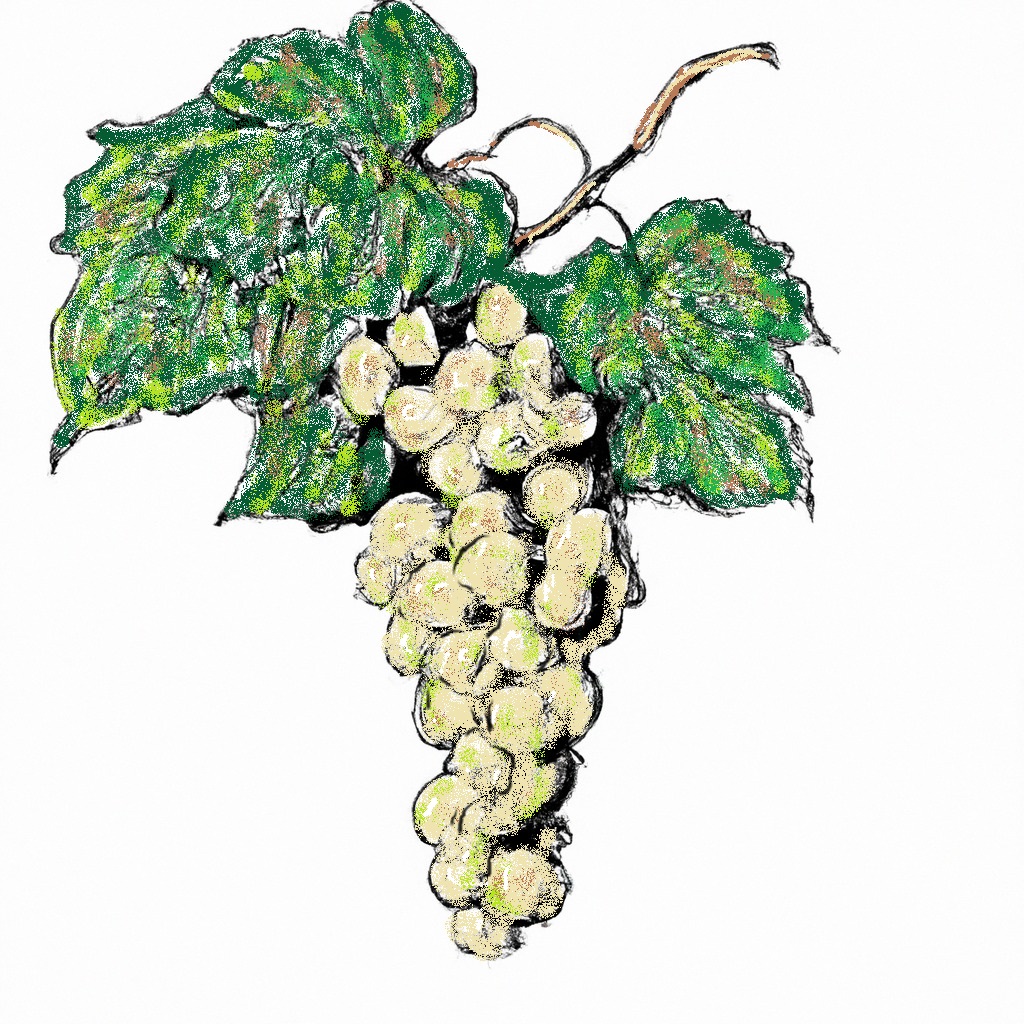
The variety was bred in 1961 at the Armenian Research Institute of Viticulture and Fruit Breeding by crossing the seedling C-484 (Madeleine Angevine X X Muscat Shasla) with the variety Urartu (White Arakseni X Black Sweet).
The leaf surface is dense, bristly-cobwebby. Autumn leaf color is yellow.
Bunch
0 cm, width
medium
6.7
(length 1 G.7–11.4 cm), conical
dense.
The berry is medium (length 13–16 mm,
width 11–14 mm), round, yellowish, with a slight waxy coating.
The skin is medium thick. The flesh is
juicy. The flavor is pleasant. There are one to three seeds per berry, usually two.
The seed is medium-sized, elliptical, and grayish-brown.
This is a mid-late-ripening wine grape variety. Full
ripeness of the berries occurs in the second ten days of September. The growing season from bud break to full ripeness
of the berries lasts 152 days, with a sum of active
temperatures of 3210°C.
The bushes are vigorous. Ripening
of the shoots is good (88%).
Yield
221 centners per hectare. Average bunch weight is 220 g.
Percentage of fruiting shoots: 55.
Number of clusters per developed shoot: 0.7, per fruiting shoot: 1.2.
Frost resistance is low. Requires winter cover.
Relatively resistant to mildew and gray mold (3 points).
or cylindrical-conical,
In 1979, it was submitted for state testing. It is grown in the Echmiadzin and Hoktemberyan districts of the
Armenian SSR.
The description was compiled at the Merdzavan experimental base of the Armenian Research Institute of Vineyards and Plant Protection.
The leaf is medium-sized, round, five-lobed with well-defined secondary lobes, deeply dissected. The leaf blade is funnel-shaped.
The upper surface is reticulated and wrinkled. The upper notches are deep,
closed, with a triangular, less often ovoid, lumen and a pointed bottom
and open, lyrate-shaped with nearly parallel sides and a sharp
bottom. The lower notches are deep, less often
middle, open, lyrate-shaped with nearly parallel sides, less often with
a narrow aperture and a sharp bottom. The petiole notch is open, lyrate-shaped
with a sharp bottom, less often closed, with an elliptical lumen. The teeth on the
lobate tips are narrowly triangular.
The teeth along the leaf blade margin are
triangular-serrate, unilaterally
convex. The pubescence on the lower leaf surface is dense, bristly-cobwebby. Autumn leaf color is
yellow.
The flower is bisexual. 15
Bunch
,0 cm, width
medium
6.7
(length 1 G.7–11.4 cm), conical
dense.
The berries are medium (length 13–16 mm,
width 11–14 mm), round, yellowish, with a slight waxy coating.
The skin is medium thick. The flesh
is juicy. The flavor is pleasant. There are one to three seeds per berry, usually two.
The seed is medium, elliptical, grayish-brown.
This is a wine grape variety with a mid-late ripening period. Full
ripeness of the berries occurs in the second ten days of September. The growing season from bud break to full ripeness of
berries lasts 152 days with a sum of active
temperatures of 3210°C.
The bushes are vigorous. Shoot ripening is good (88%).
Yield
221 centners per hectare. Average bunch weight is 220 g.
Percentage of fruiting shoots: 55.
Number of clusters per developed shoot: 0.7, per fruiting shoot: 1.2.
Frost resistance is low. Requires winter shelter.
Relatively resistant to mildew and gray mold (3 points).
In the Ararat Plain of the
Armenian SSR, it is grown as a rootstock. Recommended training is multi-arm fan-shaped, on a
trellis. The bush should bear 55-60 buds. Pruning is done at 7-8 buds.
Prefers light, humus-rich soils and southeastern slopes
with a steepness of up to 10°.
Contains the following percentage of the total bunch weight: juice and dense parts of pulp 82.8, skin 8.9, ridges 4.8,
seeds 23.6
3.5. Berry juice sugar content is
6 g
-24% with an acidity of 5.4-/l.
Used for the production of
high-quality white dessert wine. The wine tasting score is
8.6 points. As a high-yielding wine grape,
with relative resistance to some fungal diseases but not frost-resistant, it is recommended for cultivation on the Ararat Plain
(valley and foothills) when the bushes are covered for the winter.
Key characteristics: deeply dissected, funnel-shaped leaves with narrow triangular teeth at the ends of the lobes and dense, bristly-webby pubescence; dense, conical
bunch; medium-sized, round, yellowish
berries with juicy flesh; vigorous bush; mid-late ripening period.
0
0
[VARIETIES_#]
Specie
VITIS VINIFERA LINNÉ SUBSP. SATIVA (DE CANDOLLE) HEGI
Sex
Hermaphrodite

Cross
Abovyani
armenian: Աբովյանի

Armenia
Aromatic
Teinturier
Piwi
Terroir
Climate
[CLIMATE]
Soil
[SOIL]
Vintage
Alcohol by Volume
Residual Sugar
[SUGAR]
Asidity
pH
Harvest
Ageing
Technical Note
Brand
Ageing Potential
Maceration
Fermentation
[ALCOHOL]
[ALCOHOL]
[ACIDITY]
[PH]
[HARVEST]
[AGING]
[TECHNILOGY]
[BRAND]
[BRAND]
[QUALITY]
[QUALITY]
Clarity
Color Intensity
Condition
Aroma Intensity
Taste Intensity
Development
Body
Mousse
Alcohol
Sweetness
Acidity
Finish
Astringency
Balance
Readiness
Quality
[CLARITY]
[COLOR INTENSITY]
[COLOR INTENSITY]
[COLOR INTENSITY]
[TASTE INTENSITY]
[TASTE INTENSITY]
[ALCOHOL]
[MOUSSE]
[ALCOHOL]
[SUGAR]
[ACIDITY]
[ACIDITY]
[ASTRINGENCY]
[BALANCE]
[READINESS]
[QUALITY]
Berry
Cluster
Leaf
Sugar
Acidity
Tannins
Skin Thickness
Skin Color
Budding
Ripening
Flowering
Thick
Blanc
Mid - Late
Reference