Type
Hybrid
ANALOGUE

ANALOGUE
Hybrid
ANALOGUE
ANALOGUE
.jpg)

.jpg)
1958
Ajvazjan P. K. | Dokuchaeva E. N. | Abljazova A. P. | Tulaeva M. I. | Meleshko L. F. | Samborskaja A. K.
Tairov National Research Centre for Viticulture and Winemaking
Ukraine

Add a Title
Add a Title

Add a Title
Add a Title
Add a Title
Add a Title

0
.jpg)
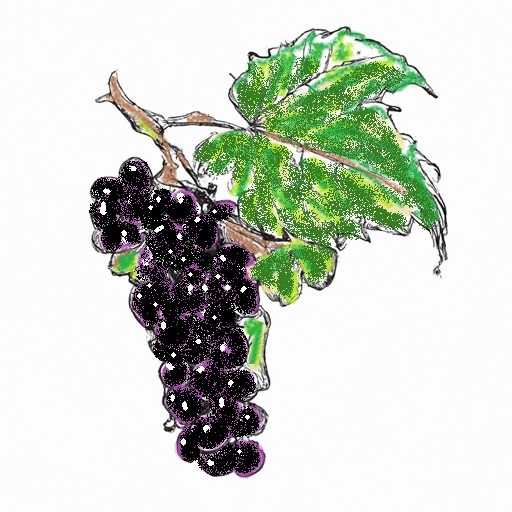
## Golubok (Голубок)
### Title
**Golubok**
### Subtitle
Cold-hardy teinturier grape variety developed for deeply colored wines in Eastern Europe.
### Classification
Red wine grape variety (teinturier)
### Species
Vitis vinifera hybrid breeding line
### Parentage
Golubok was bred in the Soviet Union by crossing:
* **Severnyy (Severnyi)** × **Odessa Early (Odesskiy Ranniy)**
Breeder: **Ya. I. Potapenko Institute for Viticulture and Winemaking** (Novocherkassk, Russia).
### Name Etymology
“**Golubok**” (Russian: Голубок) means **“little dove”** or **“bluish”**, referring to the **dark blue-black color of the berries and juice**.
---
# Technical Ampelographic Profile
### Vine
* **Growth vigor:** medium to strong
* **Growth habit:** semi-upright
* **Fertility:** high
* **Budburst:** early–medium
* **Ripening:** early
### Cluster
* **Size:** small to medium
* **Shape:** conical to cylindrical
* **Density:** medium
### Berry
* **Size:** small to medium
* **Shape:** round
* **Skin:** thick, very dark blue-black
* **Pulp:** **red-colored (teinturier)**
* **Seeds:** usually 2–3
---
# Viticultural Characteristics
| Parameter | Description |
| ------------------ | ---------------------------------------------------- |
| Climate adaptation | Cold-resistant |
| Frost tolerance | approx. **−23 to −25 °C** |
| Disease resistance | Moderate resistance to fungal diseases |
| Yield | Medium to high |
| Harvest period | Early (often August–early September in warm regions) |
Golubok was specifically bred for **continental climates with severe winters**.
---
# Oenological Characteristics
| Parameter | Typical Range |
| ------------------ | ------------- |
| Sugar potential | 20–24 °Brix |
| Titratable acidity | 6–9 g/L |
| pH | 3.2–3.5 |
| Anthocyanins | Very high |
### Wine Characteristics
* **Color:** extremely deep purple–black
* **Body:** medium to full
* **Tannins:** medium
* **Acidity:** medium-high
### Typical Aromas
* blackberry
* black cherry
* blueberry
* dark plum
* sometimes herbal or spicy notes
Because the **juice itself is red**, Golubok produces wines with **exceptionally intense color**, even without long maceration.
---
# Wine Styles
1. **Dry red wine**
2. **Blending component for color enhancement**
3. **Semi-sweet Eastern European style wines**
4. **Fortified wines (rare)**
Golubok is sometimes used to **increase color intensity in blends**, similar to teinturier varieties like:
* Alicante Bouschet
* Saperavi
---
# Geographic Distribution
Golubok is cultivated mainly in **Eastern Europe and post-Soviet regions**.
### Main regions
* Ukraine
* Russia
* Moldova
* Kazakhstan
Small plantings also exist in **Central Europe experimental vineyards**.
---
# Oenological Role
Golubok is valued for:
* **Extremely high anthocyanin concentration**
* **Cold-climate adaptability**
* **Early ripening**
* **Natural disease tolerance**
Thus it is useful for:
* **continental climates**
* **northern viticulture**
* **color enhancement in blends**
---
✅ If you want, I can also provide:
* **Full genetic pedigree and breeding program of Golubok**
* **Comparison with Saperavi and Alicante Bouschet (teinturier grapes)**
* **Ampelographic OIV descriptor table for Golubok**
* **Database-ready technical table for your wine atlas**.
======================================================
## Golubok — Grape Variety Technical Profile
### Title
**Golubok**
### Subtitle
Cold-hardy teinturier grape variety producing intensely colored red wines.
### Brand
Varietal grape cultivar (not a commercial brand)
### Varieties / Composition
100% **Golubok**
### Country / Origin
Developed in the former Soviet Union, primarily associated with
* Ukraine
* Russia
Breeding institution: Potapenko Institute of Viticulture and Winemaking (Novocherkassk).
### Introduction / Description
Golubok is a **teinturier red grape variety** bred for cold climates and high color intensity. Unlike most red grapes, both the **skin and pulp contain red anthocyanin pigments**, allowing production of extremely dark wines even with short maceration. The variety ripens early and tolerates severe winter temperatures, making it suitable for **continental viticultural zones**. It is widely used for varietal wines as well as blending to enhance color and structure.
---
# Classification Data
### Style(s)
* Dry red wine
* Semi-sweet red wine
* Blending component for color enhancement
* Occasionally rosé or fortified wine
### Classification(s)
* Red grape variety
* Teinturier grape
* Cold-climate cultivar
### Designation(s)
* Varietal wine
* Regional wine (depending on producing country)
### Category
Wine grape variety
### Parent Category
Vitis vinifera cultivars and hybrids
---
# Genetic Composition
### Parentage
Cross between:
* Severny
* Odessa Early (Odesskiy Ranniy)
---
# Technical Wine Parameters
| Parameter | Typical Range |
| --------------------- | --------------------------- |
| Alcohol Level (ABV) | 11.5–14% |
| Sugar (g/L in must) | 200–240 g/L potential |
| Residual Sugar (wine) | 0–45 g/L depending on style |
| Acidity | 6–9 g/L |
| pH | 3.2–3.5 |
---
# Viticultural Characteristics
### Harvest
* Early ripening
* Usually **late August–early September** in continental climates.
### Regions
Major cultivation areas include:
* Ukraine
* Russia
* Moldova
* Kazakhstan
Experimental vineyards exist in Central and Eastern Europe.
---
# Production Technology
### Fermentation
* Stainless steel or concrete tanks
* Temperature: **24–28 °C**
### Maceration
* 5–14 days typical
* Shorter maceration sufficient due to pigment-rich pulp.
### Ageing
* Stainless steel tanks
* Neutral oak or barrique (optional)
### Ageing Potential
3–8 years depending on structure and extraction.
### Technology Notes
* High natural pigment content
* Useful in blends for **color stabilization**
* Good adaptation to cool climates and frost conditions.
---
# Sensory Profile
### Color
Deep purple to almost opaque black.
### Tint Type
Teinturier (red flesh and juice)
### Limpidity
Clear and bright
### Color Intensity
Very high
---
### Aroma(s)
* Blackberry
* Black cherry
* Blueberry
* Dark plum
* Sometimes herbal or spicy notes
### Aroma Intensity
Medium to pronounced
### Development
Youthful to moderately developed with ageing.
---
### Taste(s)
* Dark berries
* Plum
* Black currant
* Occasionally earthy or herbal notes
### Taste Intensity
Medium to high
### Body
Medium to full
### Astringency
Medium tannins
### Sweetness
Dry to semi-sweet depending on style
### Sourness
Medium-high acidity
### Mousse
None (still wine)
---
# Overall Sensory Evaluation
### Condition
Sound and clean
### Balance
Balanced acidity and fruit concentration
### Finish
Medium to long with dark berry notes
### Readiness
Drinkable young; develops complexity after several years.
### Quality
Commercial to premium depending on vineyard and vinification.
---
# Market and Commercial Information
### Producers
Notable producers found in:
* Ukraine
* Russia
* Moldova
Many small regional wineries produce varietal Golubok wines.
### Price
Typical retail range:
**$8 – $30** depending on region and quality.
---
# Packaging
* Standard **750 ml glass bottles**
* Occasionally magnum formats.
---
# Serving
### Serving Temperature
16–18 °C
### Serving Rating(s)
Best with decanting when young.
---
# Food Pairing
Pairs well with:
* grilled meats
* lamb
* roasted game
* mushroom dishes
* aged cheeses
---
# Awards
Golubok wines occasionally receive regional competition medals in Eastern European wine competitions.
---
# Additional Attributes
### Vintage
Most wines are **single-vintage**.
### Is Kosher
Generally **not certified kosher**, unless produced under kosher supervision.
### Winemaker Note
Golubok is prized by winemakers for its **exceptionally high anthocyanin levels**, making it valuable for both varietal wines and blending to deepen color and enhance structure.
---
✅ If useful for your **wine atlas database**, I can also generate:
* **Complete OIV ampelographic descriptor table for Golubok (50+ parameters)**
* **Global teinturier grape comparison (Golubok vs Saperavi vs Alicante Bouschet)**
* **SQL / Excel database structure for grape varieties (100+ fields)**.
===================================================
## Golubok — Complete OIV Ampelographic Descriptor Table
The following table summarizes **key descriptors from the international OIV (Organisation Internationale de la Vigne et du Vin) ampelographic descriptor system** for the grape variety **Golubok**.
Values follow the **OIV 1–9 descriptor scale** where applicable (1 = very low / absent, 9 = very high / extreme).
Golubok is notable as a **teinturier grape** with **pigmented pulp**, a rare trait in *Vitis vinifera* cultivars.
---
# 1. Young Shoot (Apex and Shoot Tip)
| OIV Code | Descriptor | Golubok Description |
| -------- | --------------------------------------------------- | ------------------- |
| OIV 001 | Shape of shoot tip | Fully open |
| OIV 002 | Distribution of anthocyanin coloration of shoot tip | Medium |
| OIV 003 | Intensity of anthocyanin coloration of shoot tip | Medium |
| OIV 004 | Density of prostrate hairs on shoot tip | Medium |
| OIV 005 | Density of erect hairs on shoot tip | Low |
---
# 2. Young Leaf
| OIV Code | Descriptor | Golubok Description |
| -------- | ---------------------------------------- | ----------------------------- |
| OIV 051 | Color of upper side of young leaf | Yellow-green with bronze tint |
| OIV 052 | Density of prostrate hairs between veins | Medium |
| OIV 053 | Density of erect hairs between veins | Low |
| OIV 054 | Density of prostrate hairs on veins | Medium |
| OIV 055 | Density of erect hairs on veins | Low |
---
# 3. Shoot Characteristics
| OIV Code | Descriptor | Golubok Description |
| -------- | ---------------------------------------- | ----------------------------- |
| OIV 006 | Shoot growth habit | Semi-upright |
| OIV 007 | Internode color (dorsal side) | Green with slight red stripes |
| OIV 008 | Internode color (ventral side) | Green |
| OIV 009 | Density of erect hairs on internodes | Very low |
| OIV 010 | Density of prostrate hairs on internodes | Low |
---
# 4. Mature Leaf
| OIV Code | Descriptor | Golubok Description |
| -------- | ----------------------------------------------------- | ------------------- |
| OIV 067 | Leaf size | Medium |
| OIV 068 | Leaf shape | Pentagonal |
| OIV 069 | Number of lobes | 3–5 |
| OIV 070 | Anthocyanin coloration of main veins | Slight |
| OIV 071 | Profile of leaf blade | Slightly blistered |
| OIV 072 | Leaf blade undulation | Weak |
| OIV 073 | Petiole sinus shape | Open U-shaped |
| OIV 074 | Petiole sinus base | Narrow |
| OIV 075 | Teeth shape | Convex sides |
| OIV 076 | Teeth length relative to width | Medium |
| OIV 077 | Upper lateral sinus depth | Medium |
| OIV 078 | Lower lateral sinus depth | Shallow |
| OIV 079 | Density of prostrate hairs between veins (lower side) | Medium |
| OIV 080 | Density of erect hairs between veins | Low |
| OIV 081 | Density of prostrate hairs on main veins | Medium |
| OIV 082 | Density of erect hairs on veins | Low |
---
# 5. Inflorescence and Flower
| OIV Code | Descriptor | Golubok Description |
| -------- | ----------- | ------------------- |
| OIV 151 | Flower sex | Hermaphrodite |
| OIV 152 | Flower size | Small |
| OIV 153 | Fertility | High |
---
# 6. Bunch (Cluster)
| OIV Code | Descriptor | Golubok Description |
| -------- | --------------- | ------------------- |
| OIV 202 | Bunch size | Small to medium |
| OIV 203 | Bunch length | Short to medium |
| OIV 204 | Bunch density | Medium |
| OIV 205 | Bunch shape | Conical |
| OIV 206 | Number of wings | 0–1 |
| OIV 207 | Peduncle length | Short |
---
# 7. Berry
| OIV Code | Descriptor | Golubok Description |
| -------- | ---------------- | ------------------- |
| OIV 220 | Berry size | Small to medium |
| OIV 221 | Berry shape | Round |
| OIV 222 | Berry uniformity | Medium |
| OIV 223 | Skin color | Blue-black |
| OIV 224 | Skin thickness | Thick |
| OIV 225 | Flesh color | Red (teinturier) |
| OIV 226 | Juice color | Dark red |
| OIV 227 | Berry firmness | Medium |
| OIV 228 | Seeds per berry | 2–3 |
---
# 8. Phenology
| OIV Code | Descriptor | Golubok Description |
| -------- | ----------------- | ------------------- |
| OIV 301 | Time of budburst | Early |
| OIV 302 | Time of flowering | Early–medium |
| OIV 303 | Time of veraison | Early |
| OIV 304 | Ripening time | Early |
---
# 9. Agronomic Traits
| OIV Code | Descriptor | Golubok Description |
| -------- | ----------------------------- | -------------------- |
| OIV 351 | Vine vigor | Medium to high |
| OIV 352 | Shoot fertility | High |
| OIV 353 | Yield potential | Medium–high |
| OIV 354 | Frost resistance | High (−23 to −25 °C) |
| OIV 355 | Resistance to fungal diseases | Moderate |
| OIV 356 | Drought tolerance | Moderate |
---
# 10. Oenological Potential
| Parameter | Typical Values |
| ------------------ | -------------- |
| Sugar accumulation | 20–24 °Brix |
| Titratable acidity | 6–9 g/L |
| pH | 3.2–3.5 |
| Anthocyanins | Very high |
| Tannins | Medium |
---
# Key Ampelographic Identification Traits
Golubok can be identified by the combination of:
1. **Teinturier berries with red pulp and juice**
2. **Small–medium conical bunches**
3. **Pentagonal 3–5 lobed leaves**
4. **Early ripening**
5. **Very intense anthocyanin pigmentation**
---
✅ If you want, I can also provide:
* **DNA pedigree map of Golubok breeding**
* **Comparison ampelography: Golubok vs Saperavi vs Alicante Bouschet**
* **Complete teinturier grape catalogue (worldwide)**
* **Database-ready OIV descriptor dataset (Excel/SQL, 120+ fields)** for grape varieties.
0
0
[VARIETIES_#]
Specie
VITIS INTERSPECIFIC CROSSING
Sex
Hermaphrodite

Hybrid
Golubok
Голубок

Ukraine
Aromatic
Teinturier
Piwi
Terroir
Climate
[CLIMATE]
Soil
[SOIL]
Vintage
Alcohol by Volume
Residual Sugar
[SUGAR]
Asidity
pH
Harvest
Ageing
Technical Note
Brand
Ageing Potential
Maceration
Fermentation
[ALCOHOL]
[ALCOHOL]
[ACIDITY]
[PH]
[HARVEST]
[AGING]
[TECHNILOGY]
[BRAND]
[BRAND]
[QUALITY]
[QUALITY]
Clarity
Color Intensity
Condition
Aroma Intensity
Taste Intensity
Development
Body
Mousse
Alcohol
Sweetness
Acidity
Finish
Astringency
Balance
Readiness
Quality
[CLARITY]
[COLOR INTENSITY]
[COLOR INTENSITY]
[COLOR INTENSITY]
[TASTE INTENSITY]
[TASTE INTENSITY]
[ALCOHOL]
[MOUSSE]
[ALCOHOL]
[SUGAR]
[ACIDITY]
[ACIDITY]
[ASTRINGENCY]
[BALANCE]
[READINESS]
[QUALITY]
Sugar
Acidity
Moderate-High
Tannins
Low-Moderate
Berry
Cluster
Leaf
Pentagonal 3–5 lobed leaves
Skin Thickness
Skin Color
Budding
Ripening
Flowering
Noir
Reference