Type
Cross
ANALOGUE

ANALOGUE
Cross
ANALOGUE
ANALOGUE
.jpg)

.jpg)
France

Add a Title
Add a Title

Add a Title
Add a Title
Add a Title
Add a Title

0
.jpg)
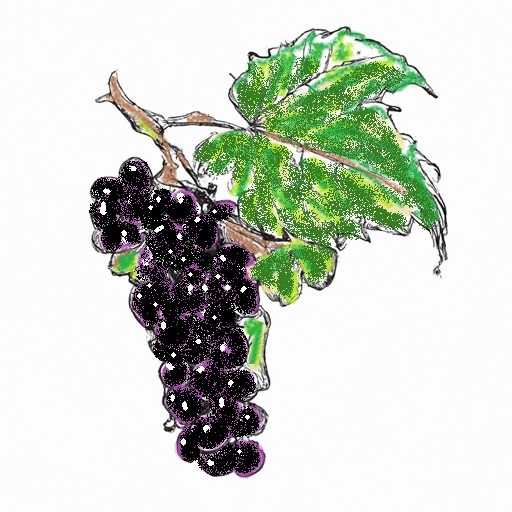
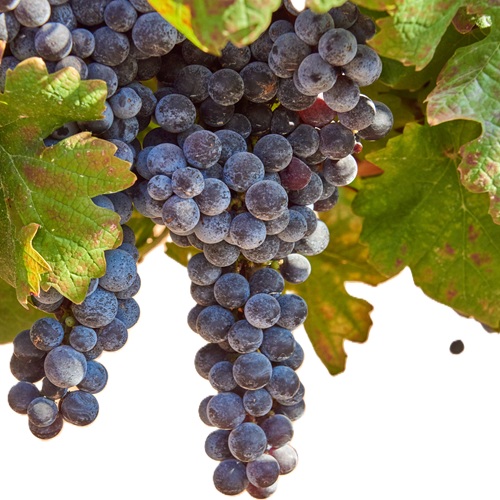
Merlot is one of the world's most widely planted and internationally important black wine grape varieties. Originating in the Bordeaux region of France, it is valued for its early ripening, consistent productivity, soft tannins, generous fruit expression and versatility in both varietal wines and blends. Merlot forms one of the principal grapes of Bordeaux and has become a global benchmark for premium red wine production.
Medium- to high-vigor vine with regular productivity and moderate yields when properly managed. The variety develops medium-sized compact clusters with relatively thin-skinned berries that accumulate sugars readily while maintaining moderate acidity. Wines are typically deeply colored with supple tannins and approachable texture, although exceptional vineyard sites produce highly age-worthy examples.
=========================
Merlot is one of the most influential and widely cultivated red wine grape varieties in the world. Native to the Bordeaux region of southwestern France, it is renowned for producing wines with generous fruit expression, smooth tannins, moderate acidity and early accessibility while also possessing the capacity to produce long-lived, complex wines from exceptional terroirs. Its early ripening relative to Cabernet Sauvignon has made it especially valuable in regions with shorter growing seasons or cooler autumns.
Genetic analysis conducted by French researchers demonstrated that Merlot is the natural offspring of Cabernet Franc and the nearly extinct variety Magdeleine Noire des Charentes. This discovery also established that Merlot is a half-sibling of Cabernet Sauvignon, which shares Cabernet Franc as one parent.
Today Merlot ranks among the most extensively planted wine grapes globally and serves as both an outstanding varietal wine and one of the principal blending components in Bordeaux, where it contributes body, softness, color intensity and aromatic richness. Its adaptability to diverse climates and soils has enabled successful cultivation across Europe, the Americas, Oceania, Asia and the Middle East.
=============================
Merlot is one of the world's most popular and versatile red wine grape varieties.
It is renowned for its smooth, soft tannins and approachable nature, often serving as an entry point for new red wine drinkers.
- **Ripening Period**: Slightly earlier than Cabernet Sauvignon
- **Climate Preference**: Thrives in moderate to warm climates; too much heat can lead to over-ripeness, while cooler climates can retain acidity and enhance structure.
- **Soil Preference**: Does well in clay, limestone, and gravel-based soils, with clay soils in particular helping maintain water retention.
- **Resilience**: Susceptible to frost due to early budding; prone to coulure (poor fruit set) under adverse flowering conditions
### **Vinification**
- **Typical Alcohol**: 13%–15%
- **Acidity**: Moderate (pH ~3.4–3.7)
- **Tannin Structure**: Soft to moderate
- **Aging Potential**: Develops well in oak; young Merlots are approachable, but well-made versions can age for 5–15+ years.
- **Common Blends**: Frequently blended with Cabernet Sauvignon, Cabernet Franc, and Malbec in Bordeaux-style blends.
### **Sensory Profile**
- **Color**: Deep ruby or garnet, sometimes inky in concentration
- **Aromas**:
- **Primary**: Plum, cherry, raspberry, and blackberry
- **Secondary**: Chocolate, tobacco, clove, and vanilla (often from oak aging)
- **Tertiary**: Earth, truffle, and leather in aged examples
- **Flavor Profile**: Lush, fruit-forward with soft tannins and balanced acidity
- **Body**: Medium to full-bodied
- **Texture**: Smooth, velvety
### **Notable Regions**
- **France**: Bordeaux (Right Bank, including Pomerol and Saint-Émilion)
- **United States**: Napa Valley, Sonoma County, and Washington State
- **Italy**: Tuscany (Super Tuscans)
- **Other**: Chile, Argentina, Australia, South Africa
### **Food Pairing**
- **Best Pairings**: Roast chicken, duck, pork, lamb, grilled vegetables, mushroom dishes, and creamy cheeses.
- **Versatility**: The softer tannins allow Merlot to pair with a wide range of dishes, including lighter options compared to other red wines.
Would you like to delve into any specific aspect of Merlot, such as its blending role or vinification techniques?
======
Analogue / SynonymMerlau, Merlau Noir, Merlau Rouge, Merlot Noir, Merlot Black, Bigney, Plant Médoc, Alicante (historical local synonym), Sémillon Rouge (obsolete), Vidal, Picard, Crabutet Noir (regional synonyms). More than 80 historical synonyms are recorded in VIVC.
0
0
[VARIETIES_#]
Specie
VITIS VINIFERA LINNÉ SUBSP. SATIVA (DE CANDOLLE) HEGI
Sex
Hermaphrodite

Cross
Merlot

France
Aromatic
Teinturier
Piwi
Terroir
Climate
[CLIMATE]
Soil
[SOIL]
Vintage
Alcohol by Volume
Residual Sugar
[SUGAR]
Asidity
pH
Harvest
Ageing
Technical Note
Brand
Ageing Potential
Maceration
Fermentation
[ALCOHOL]
[ALCOHOL]
[ACIDITY]
[PH]
[HARVEST]
[AGING]
[TECHNILOGY]
[BRAND]
[BRAND]
[QUALITY]
[QUALITY]
Clarity
Color Intensity
Condition
Aroma Intensity
Taste Intensity
Development
Body
Mousse
Alcohol
Sweetness
Acidity
Finish
Astringency
Balance
Readiness
Quality
[CLARITY]
[COLOR INTENSITY]
[COLOR INTENSITY]
[COLOR INTENSITY]
[TASTE INTENSITY]
[TASTE INTENSITY]
[ALCOHOL]
[MOUSSE]
[ALCOHOL]
[SUGAR]
[ACIDITY]
[ACIDITY]
[ASTRINGENCY]
[BALANCE]
[READINESS]
[QUALITY]
Sugar
Acidity
Low-Moderate
Tannins
Low-Moderate
Berry
Cluster
Leaf
Medium-sized, round. Deep blue to black with a bluish hue.
Medium to large, cylindrical-conical, sometimes winged
The leaves are medium sized, pentagonal, five lobed, wavy, of a green but not intense color, and fairly tomentose even on the underside. The petiolar sinus is U-shaped
Skin Thickness
Skin Color
Budding
Ripening
Flowering
Thin
Noir
Early
Early - Mid
Mid
Reference