Add a Title
Add a Title

Add a Title
Add a Title
Add a Title
Add a Title

.jpg)
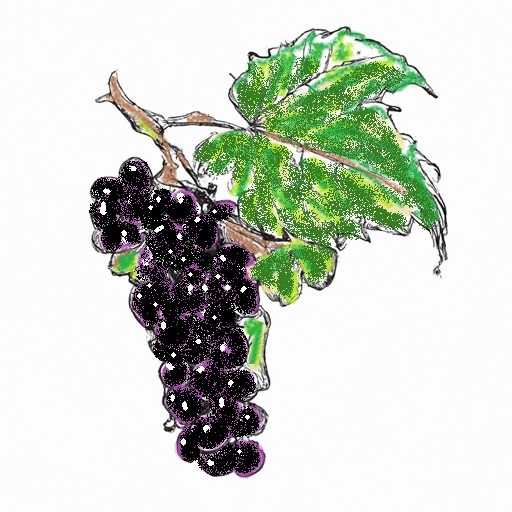
Pinot Meunier grape variety, a close relative of Pinot Noir, is an important component of many Champagne blends, offering unique qualities that contribute to the complexity and depth of Champagnes and various still wines. Here's a comprehensive overview of its technical characteristics:
### Origin and Distribution
- **Origin:** Pinot Meunier is originally from France, most notably from the Champagne region. Its name comes from the French word "meunier," which means "miller," referring to the flour-like dusty appearance of its leaves, reminiscent of a miller's white clothes.
- **Distribution:** While it is most associated with Champagne, Pinot Meunier is also grown in other wine regions of France, as well as in Germany (where it's known as Schwarzriesling, Müllerrebe, or Müller-Traube), Australia, the USA (particularly in Oregon and California), and other wine-producing countries.
### Viticultural Characteristics
- **Bud Break and Ripening:** Pinot Meunier tends to bud and ripen around the same time as Pinot Noir. It is appreciated for its adaptability to cooler climates, making it well-suited for the marginal climate of Champagne and similar regions.
- **Vigor and Yield:** The vine has medium vigor and can produce moderate to high yields. It is less susceptible to some of the viticultural hazards that affect Pinot Noir, making it a reliable choice for growers in challenging climates.
- **Cluster and Berry Size:** The grape clusters are compact and cylindrical, with small to medium-sized berries. The skins are thin, contributing to a more delicate extraction process during winemaking.
- **Disease Resistance:** Pinot Meunier has a moderate resistance to fungal diseases like botrytis but can be susceptible to others such as powdery mildew and downy mildew, necessitating careful vineyard management.
### Winemaking Characteristics
- **Aromatics and Flavors:** Pinot Meunier contributes fresh, fruity, and floral aromatics to the wine, often with notes of cherry, apple, pear, and sometimes a hint of earthiness. It is valued for adding a layer of complexity and depth, particularly in the non-vintage Champagne blends.
- **Acidity:** Wines made with Pinot Meunier typically have good acidity, contributing to the freshness and vibrancy of the blend.
- **Body and Texture:** This grape tends to produce wines with a lighter body and a softer texture compared to Pinot Noir, contributing to the approachability and elegance of the final wine.
- **Aging Potential:** While Pinot Meunier is often considered for its immediate charm and fruitiness in young wines, certain expressions, especially when grown in optimal conditions and crafted with care, can exhibit aging potential.
### Role in Blends
- In Champagne, Pinot Meunier is one of the three main grapes used in the production of Champagne, alongside Pinot Noir and Chardonnay. It is prized for its ability to add fruitiness and floral notes, making the wines more accessible in their youth. It also plays a crucial role in adding complexity to non-vintage blends, where consistency from year to year is key.
Despite being somewhat overshadowed by the more famous Pinot Noir, Pinot Meunier has gained recognition for its distinct contribution to wine, particularly in Champagne, where its characteristics are embraced for their contribution to the region's famed sparkling wines. Its adaptability and resilience also make it an attractive option for growers in cooler climate regions around the world, where it continues to produce expressive and delightful still and sparkling wines.
0
0
[VARIETIES_#]
Specie
VITIS VINIFERA LINNÉ SUBSP. SATIVA (DE CANDOLLE) HEGI
Sex
Hermaphrodite

Clone
Pinot Meunier

France
Type
Clone
ANALOGUE

ANALOGUE
Clone
ANALOGUE
ANALOGUE
.jpg)

.jpg)
France
0
Aromatic
Teinturier
Piwi
Terroir
Climate
[CLIMATE]
Soil
[SOIL]
Vintage
Alcohol by Volume
Residual Sugar
Asidity
pH
Harvest
Ageing
Technical Note
Brand
Ageing Potential
Maceration
Fermentation
[ALCOHOL]
[ALCOHOL]
[SUGAR]
[ACIDITY]
[PH]
[HARVEST]
[AGING]
[TECHNILOGY]
[BRAND]
[BRAND]
[QUALITY]
[QUALITY]
Clarity
Color Intensity
Condition
Aroma Intensity
Taste Intensity
Development
Body
Mousse
Alcohol
Sweetness
Acidity
Finish
Astringency
Balance
Readiness
Quality
[CLARITY]
[COLOR INTENSITY]
[COLOR INTENSITY]
[COLOR INTENSITY]
[TASTE INTENSITY]
[TASTE INTENSITY]
[ALCOHOL]
[MOUSSE]
[ALCOHOL]
[SUGAR]
[ACIDITY]
[ACIDITY]
[ASTRINGENCY]
[BALANCE]
[READINESS]
[QUALITY]
Sugar
Acidity
Tannins
Berry
Cluster
Leaf
Skin Thickness
Skin Color
Budding
Ripening
Noir
Late
Reference