Add a Title
Add a Title

Add a Title
Add a Title
Add a Title
Add a Title

.jpg)
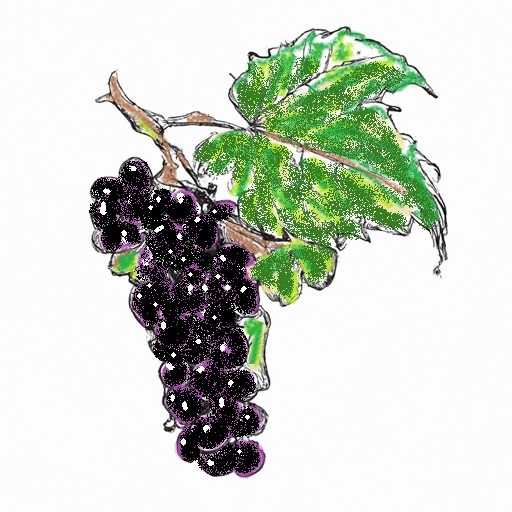
## Vitis amurensis (Ruprecht)
### **Technical Ampelographic & Viticultural Profile**
**Title:** *Vitis amurensis* Ruprecht
**Symbol:** VAMUR
**VIVC Code:** 1300 (species entry; no single cultivar code)
**Skin Color:** Dark (black to deep blue berries)
**Berry Color (Wine Potential):** Deep red / purple (high anthocyanins)
**Skin Thickness:** Thick (excellent rot resistance)
---
### **Phenology & Biology**
* **Budding:** Very early
* **Ripening:** Early to mid-season (adapted to short growing seasons)
* **Sex:** Dioecious (male and female plants separate; some hermaphrodite selections exist)
* **Species:** *Vitis amurensis* (wild Asian species)
* **Is Aromatic:** Generally neutral to lightly aromatic
* **Is Teinturier:** No (pigment mainly in skins, not pulp)
---
### **Morphology (Ampelography)**
* **Leaf Profile:**
* Medium to large, 3–5 lobed
* Coarsely serrated margins
* Slightly pubescent underside
* **Cluster:**
* Small to medium, loose to moderately compact
* **Berries:**
* Small, spherical
* Thick-skinned, high acidity
---
### **Ecology & Adaptation**
* **Climate:**
* Extremely cold-hardy (down to −35 to −40 °C)
* Native to continental monsoon climates
* **Soil:**
* Prefers well-drained, slightly acidic soils
* Tolerates poor, forest-type soils
---
### **Origin & Taxonomy**
* **Origin Country:** Russia / China / Korea
* **Natural Habitat:** Amur River basin forests
* **Authority:** Franz Josef Ruprecht
* **Type:** Wild species (not a cultivar)
---
### **Genetics & Breeding Role**
* **Parentage:** Wild species (no defined parents)
* **Use in Breeding:**
Critical for cold-resistant hybrids, especially crosses with *Vitis vinifera*.
**Important Hybrids / Derivatives:**
* Zarya Severa
* Severny
* Rondo
* Cabernet Cortis
---
### **Viticultural Characteristics**
* Extremely resistant to:
* Frost
* Downy mildew
* Some fungal diseases
* High vigor
* Requires canopy control in cultivation
* Naturally high acidity and low sugar accumulation
---
### **Aroma & Taste Profile**
* **Primary Notes:**
* Tart red berries (cranberry, sour cherry)
* Herbal, forest floor
* **Structure:**
* Very high acidity
* Moderate tannins
* Low alcohol potential (without breeding/improvement)
---
### **Enological Role**
* Rarely used pure for quality wine
* Primarily used in:
* Hybrid breeding programs
* Cold-climate viticulture development
* Improves:
* Frost resistance
* Disease tolerance
---
### **Summary**
*Vitis amurensis* is one of the most important non-*vinifera* grape species in global viticulture—not for its direct wine quality, but for its **genetic contribution to cold-climate grape breeding**. Its extreme frost resistance and disease tolerance make it indispensable for expanding viticulture into harsh continental climates.
========================================================
## OIV Ampelographic Descriptor System for Vitis amurensis
The **OIV (International Organisation of Vine and Wine)** descriptor system is a **standardized ampelographic coding scheme** used globally to describe grapevine morphology, phenology, and agronomic traits.
Each descriptor has:
* A **code (e.g., OIV 001)**
* A **trait definition**
* A **discrete scale (usually 1–9)**
Below is a **technical OIV descriptor profile adapted specifically to *Vitis amurensis*** (based on species-level observations; note: variability exists among wild populations and selections).
---
# **1. Young Shoot (OIV 001–016)**
| Code | Descriptor | Typical Expression (*V. amurensis*) |
| ----------- | ------------------------- | ----------------------------------- |
| **OIV 001** | Young shoot tip shape | Fully open |
| **OIV 002** | Tip hair density | Medium to high |
| **OIV 003** | Anthocyanin coloration | Strong |
| **OIV 004** | Erect hairs (tip) | Medium |
| **OIV 005** | Prostrate hairs (tip) | High |
| **OIV 006** | Internode color (dorsal) | Green with red stripes |
| **OIV 007** | Internode color (ventral) | Green |
| **OIV 008** | Node color | Reddish |
**Interpretation:**
Strong anthocyanin coloration is a key marker distinguishing *amurensis* from many *vinifera* cultivars.
---
# **2. Young Leaf (OIV 051–054)**
| Code | Descriptor | Expression |
| ----------- | -------------------- | ------------------------------ |
| **OIV 051** | Upper side color | Green with bronze/reddish tint |
| **OIV 052** | Hair density (upper) | Low |
| **OIV 053** | Hair density (lower) | Medium |
| **OIV 054** | Leaf surface texture | Slightly blistered |
---
# **3. Mature Leaf (OIV 065–093)**
| Code | Descriptor | Expression |
| ----------- | ---------------------------- | ---------------------------- |
| **OIV 065** | Leaf size | Medium to large |
| **OIV 067** | Leaf shape | Pentagonal |
| **OIV 068** | Number of lobes | 3–5 (often 5) |
| **OIV 070** | Anthocyanin on veins | Present |
| **OIV 072** | Teeth shape | Both convex/straight |
| **OIV 076** | Petiole sinus | Open to slightly overlapping |
| **OIV 079** | Upper lateral sinuses | Deep |
| **OIV 084** | Hair density (lower surface) | Medium to high |
| **OIV 093** | Autumn coloration | Very strong red |
**Key diagnostic trait:**
➡️ Intense **red autumn foliage** — much stronger than typical *Vitis vinifera*.
---
# **4. Inflorescence & Flower (OIV 151–154)**
| Code | Descriptor | Expression |
| ----------- | ----------------- | -------------------------------- |
| **OIV 151** | Flower sex | Dioecious (male/female separate) |
| **OIV 152** | Flower morphology | Functionally unisexual |
| **OIV 154** | Fertility | Variable (depends on sex type) |
---
# **5. Bunch (Cluster) (OIV 202–208)**
| Code | Descriptor | Expression |
| ----------- | --------------- | --------------- |
| **OIV 202** | Bunch size | Small to medium |
| **OIV 203** | Bunch length | Short |
| **OIV 204** | Bunch density | Loose to medium |
| **OIV 206** | Peduncle length | Medium |
| **OIV 208** | Lignification | Partial |
---
# **6. Berry (OIV 220–243)**
| Code | Descriptor | Expression |
| ----------- | ------------------ | ----------------------- |
| **OIV 220** | Berry size | Small |
| **OIV 223** | Berry shape | Round |
| **OIV 225** | Skin color | Dark blue-black |
| **OIV 227** | Skin thickness | Thick |
| **OIV 230** | Flesh pigmentation | Absent (not teinturier) |
| **OIV 235** | Juice sweetness | Low |
| **OIV 236** | Juice acidity | Very high |
| **OIV 241** | Seed number | 2–3 |
| **OIV 243** | Seed size | Medium |
---
# **7. Phenology (OIV 301–303)**
| Code | Descriptor | Expression |
| ----------- | --------------- | ---------- |
| **OIV 301** | Budburst timing | Very early |
| **OIV 302** | Flowering time | Early |
| **OIV 303** | Ripening time | Early–mid |
---
# **8. Resistance & Adaptation (OIV 401–405)**
| Code | Descriptor | Expression |
| ----------- | ------------------------- | -------------- |
| **OIV 401** | Frost resistance | Extremely high |
| **OIV 402** | Drought tolerance | Moderate |
| **OIV 403** | Downy mildew resistance | High |
| **OIV 404** | Powdery mildew resistance | Moderate |
| **OIV 405** | Botrytis resistance | High |
---
# **9. Key Diagnostic OIV Signature of *Vitis amurensis***
A trained ampelographer would identify the species by this **combination of OIV traits**:
* Strong anthocyanin coloration of shoots (**OIV 003**)
* Dioecious flowers (**OIV 151**)
* Small, acidic berries (**OIV 220 + 236**)
* Deeply lobed leaves (**OIV 068**)
* Very high frost resistance (**OIV 401**)
* Intense red autumn coloration (**OIV 093**)
---
# **Important Technical Note**
Unlike cultivated varieties of *Vitis vinifera*, *Vitis amurensis* shows:
* **High intra-species variability**
* Frequent **ecotype differentiation**
* OIV descriptors may shift depending on:
* Geographic origin (Russia vs China populations)
* Hybridization level
---
## **Summary**
The OIV descriptor table for *Vitis amurensis* highlights a grapevine species optimized by nature for **extreme climates**, identifiable by a unique combination of:
* **Cold hardiness**
* **High acidity**
* **Distinct leaf morphology and pigmentation**
---
If you want, I can provide a **full comparative OIV matrix: *Vitis amurensis* vs *Vitis vinifera* vs *Vitis labrusca*** or go into **numeric scoring scales (1–9) used in official OIV sheets**.
0
0
[VARIETIES_#]
Specie
VITIS VINIFERA LINNÉ SUBSP. SATIVA (DE CANDOLLE) HEGI
Sex
Hermaphrodite

Native
VITIS AMURENSIS RUPRECHT

Type
Native
ANALOGUE

ANALOGUE
Native
ANALOGUE
ANALOGUE
.jpg)
.jpg)
0
Aromatic
Teinturier
Piwi
Terroir
Climate
[CLIMATE]
Soil
[SOIL]
Vintage
Alcohol by Volume
Residual Sugar
Asidity
pH
Harvest
Ageing
Technical Note
Brand
Ageing Potential
Maceration
Fermentation
[ALCOHOL]
[ALCOHOL]
[SUGAR]
[ACIDITY]
[PH]
[HARVEST]
[AGING]
[TECHNILOGY]
[BRAND]
[BRAND]
[QUALITY]
[QUALITY]
Clarity
Color Intensity
Condition
Aroma Intensity
Taste Intensity
Development
Body
Mousse
Alcohol
Sweetness
Acidity
Finish
Astringency
Balance
Readiness
Quality
[CLARITY]
[COLOR INTENSITY]
[COLOR INTENSITY]
[COLOR INTENSITY]
[TASTE INTENSITY]
[TASTE INTENSITY]
[ALCOHOL]
[MOUSSE]
[ALCOHOL]
[SUGAR]
[ACIDITY]
[ACIDITY]
[ASTRINGENCY]
[BALANCE]
[READINESS]
[QUALITY]
Sugar
Acidity
Tannins
Berry
Cluster
Leaf
Skin Thickness
Skin Color
Budding
Ripening
Noir
Reference